
MU: Dark Epoch Review (2026) – Is It Worth Playing on PC?

MU: Dark Epoch hit Steam on October 17, 2025, and if you spent any part of your early 2000s childhood grinding through MU Online, that name alone probably made you sit up a little straighter. Developed by 37GAMES, the game bills itself as the best entry in the MU series to date, promising remastered classes, cinematic visuals, and a living world packed with dungeons and guild warfare. So does any of that actually deliver?
Short answer: it depends heavily on what you’re walking in expecting.
If you want a breezy free-to-play MMORPG you can half-watch while doing other things, there’s a genuine appeal here. But if you’re a competitive player who expects meaningful PvP or a fair progression curve without opening your wallet, you’re going to run into walls sooner than you’d like.
If you decide to give it a shot, you can start playing MU: Dark Epoch for free here and judge the experience for yourself it costs nothing to find out whether the loop clicks for you.
What is MU: Dark Epoch?
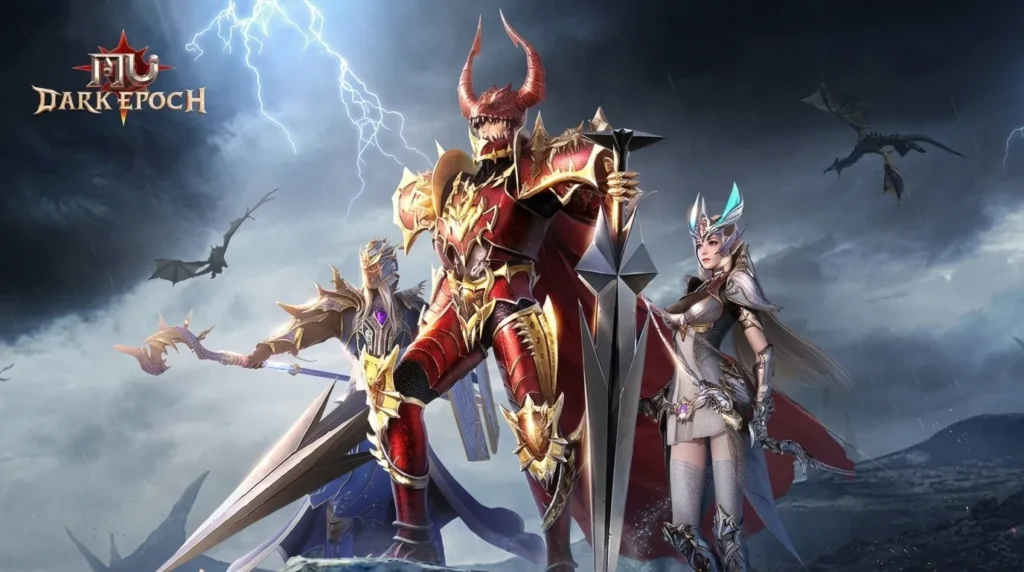
At its core, MU: Dark Epoch is a fantasy MMORPG built on the bones of the classic MU Online universe. It’s free to play on Steam, set in a dark medieval fantasy world, and structured around three pillars that have defined the series for decades: class identity, loot chasing, and open-world PvP.
One thing worth knowing upfront this is technically a mobile game. It launched on Android and iOS well before it made its way to PC, and that context shapes a lot of what you’ll experience. The PC version runs natively through Steam without an emulator, which is a plus, but its mobile origins show up in the interface, menus, and overall design philosophy in ways that matter.
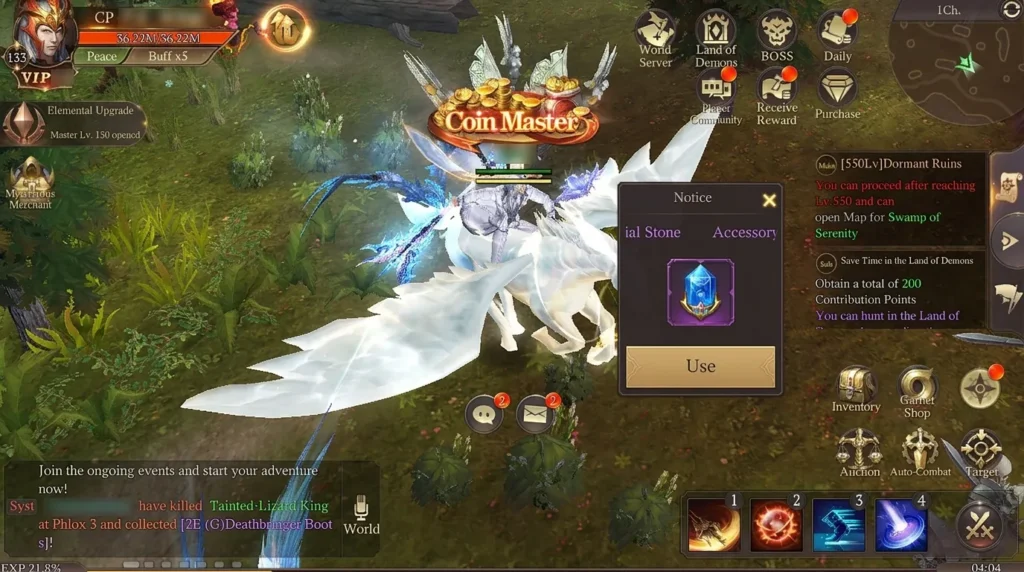
Visually, it uses a top-down 2.5D perspective. The character models are more polished than you might expect, and the skill effects have real flair without becoming a complete eyesore. The art direction leans dark and gothic very much in line with the series’ identity. The soundtrack is fine, occasionally memorable, but mostly fades into background noise after the first few hours.
MU Dark Epoch classes & character
This is where the game genuinely earns its praise.
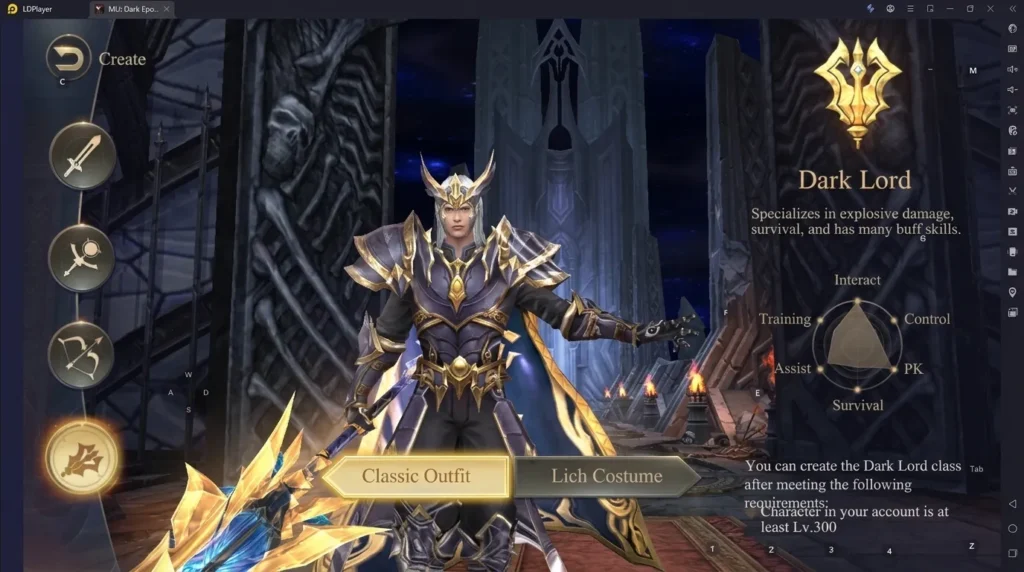
MU: Dark Epoch brings back the iconic classes from the original series and expands them in meaningful ways. You pick from the classic archetypes warrior, mage, archer, and others and from there, a dynamic class change system lets you reshape your character’s direction as you level up. This isn’t just a cosmetic reskin. Each branch plays noticeably differently, and hitting those class change milestones gives progression a sense of evolution that a lot of MMORPGs simply skip.
The skill system reinforces this. You’re not just moving down a linear tree unlocking abilities you’re choosing a playstyle. Warriors can branch into tank-heavy brawlers or damage-focused berserkers. Mages split between burst casting and sustained area-of-effect builds. The variety is real, and working out your optimal setup is one of the more engaging parts of the early-to-mid game.
Gear is the other half of the equation. Regular monsters can drop exceptional equipment, and the game runs a 300% drop rate boost across most content. Enhancing gear up to +13 forms the core power loop, and when a good drop lands, it does feel rewarding. The auction house allows free trading between players, which creates an actual economy a refreshing alternative to the closed vendor loops that kill player engagement in lesser MMORPGs.
AFK leveling & gameplay loop explained
Here’s where opinions split sharply.
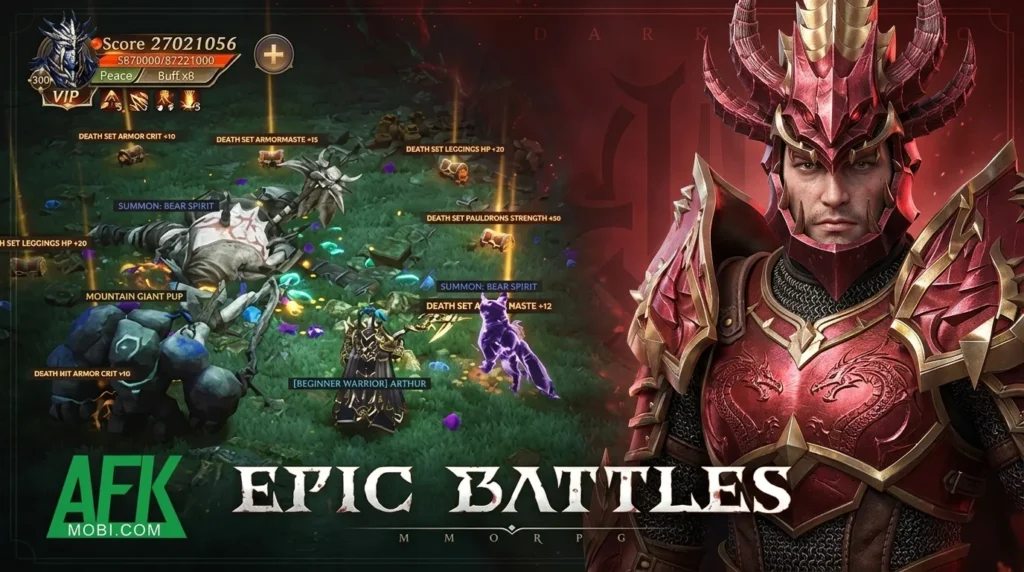
MU: Dark Epoch includes an AFK leveling system that lets your character grind automatically while you’re offline or busy. For casual players, this is genuinely convenient. For anyone who wants an immersive, engaged experience, it makes the whole thing feel like a screensaver with loot. The first 90 levels move by quickly in auto-combat mode whether that sounds like a feature or a red flag tells you a lot about whether this game is for you.
Past level 90, the grind slows down considerably and manual play becomes more relevant. The moment-to-moment combat is fast and snappy enough to hold attention when you’re actually engaged, and boss fights in group content require real coordination. The dungeon system teaming up with guild members to tackle increasingly difficult encounters is where the social design pays off best. These fights are fun, if not particularly demanding by genre standards.
The guild system itself is well-constructed. Establishing a guild, recruiting members, and competing for server dominance in Roland City gives late-game play a clear purpose. Guild wars are the kind of content that keeps people setting daily login reminders, and the social infrastructure supporting them is solid.
MU Dark Epoch PvP system
Let’s be direct about this, because it affects whether casual players will stick around past the first week.
MU: Dark Epoch features open-world PvP with no opt-out. High-level players can attack lower-level players without any meaningful restriction. Predictably, this creates problems level 200+ characters farming players who are AFK in lower-level zones, with no meaningful reward for the attacker beyond ruining someone’s session. There’s no level-gap protection, no dedicated PvP zones, and no arena to redirect competitive players away from PvE content.
World boss encounters aren’t safe either. Bosses reward everyone who lands hits, but open PvP during these events turns them into chaotic kill zones where an organized guild can make the entire fight miserable for anyone flying solo. The community has raised this repeatedly, and the developers have acknowledged the feedback but no structural fixes had been implemented as of mid-2026.
For players who don’t care about PvP, this isn’t just an annoyance. It directly disrupts daily task completion, since some of the most valuable daily content takes place in open zones where you’re a valid target.
Is MU: Dark Epoch Pay-to-Win?
Yes in a meaningful way, not just a cosmetic one.
The diamond currency unlocks content that free players can’t reasonably grind toward, and the gap between spenders and non-spenders becomes obvious in PvP by the mid-game. Getting one-shot from across the map by a heavy spender in Roland City isn’t a hypothetical players report it regularly.
That said, the early game is genuinely generous. Free players can move at a solid pace through the first several dozen hours, and the free trade economy adds a real workaround. Players who understand the auction house and invest time in trading can close some of the spending gap not all of it, but enough to stay competitive in certain areas.
There’s also one detail that deserves a mention on its own: naming your character costs real money. At character creation, your name is auto-generated. Changing it requires an in-game purchase. For a free-to-play MMORPG launching in 2025, that choice feels unnecessary, and it sets an early tone about where the monetization priorities sit.
System requirements
Visually, MU: Dark Epoch looks better than its mobile origins might lead you to expect. Character models are detailed, skill effects are flashy without becoming overwhelming, and the dark fantasy environments hold up well. Dynamic costumes add genuine visual variety, and the overall aesthetic stays true to the grim tone the series has always carried.
| Feature | Details |
|---|---|
| Developer | 37Games |
| Publisher | 37Games |
| Release Date | October 17, 2025 |
| Platform | PC (Steam) |
| Genre | Fantasy MMORPG |
| Business Model | Free-to-Play |
| Steam Rating | Mixed (57% Positive / ~585 Reviews) |
| Metacritic | No critic score; User Score: tbd |
| Minimum CPU | Intel Core i3-4330 |
| Minimum GPU | Intel HD 4600 |
| Minimum RAM | 1 GB |
| Storage | ~800 MB |
| Steam Deck | Not officially supported |
| Controller Support | Not native (touchscreen UI roots) |
| Languages | English (interface), multiple server regions |
| Peak Players (Steam) | ~1,500 concurrent (launch week) |
| Current Status | Active, regular events & guild wars |
To get the best performance in Dark Epoch, check out our guide to optimizing your gaming PC for maximum FPS
Who should play MU Dark Epoch?

Three types of players will get the most out of this game.
MU Online veterans who want a modernized take on the classic loop will find a lot to recognize. The class system, loot design, and server-wide guild competition all carry the DNA of the original faithfully enough to feel like a genuine continuation rather than a cash grab wearing the name.
Casual players who want a free MMORPG to run in the background and check in on periodically will find the AFK systems work in their favor rather than against them.
Social players focused on joining an active guild and competing in organized server events will find the late game genuinely engaging this is where the game’s design actually clicks.
Competitive solo players, anyone with a low tolerance for pay-to-win mechanics, and players who want a structured PvP system should probably look elsewhere or at least go in with carefully managed expectations.
If you want to judge the loop for yourself, the game is free to download on Steam, so the barrier to finding out is minimal.
Steam Rating and Community Verdict
On Steam, MU: Dark Epoch currently sits at Mixed, with roughly 57% positive reviews out of more than 585 total. Recent reviews trend slightly lower at around 54% positive, which suggests some player fatigue and lingering frustration with unresolved issues. The Metacritic user score tells a similar story enthusiastic praise from series fans, sharp criticism from players burned by the monetization model and PvP structure.
There are no professional critic reviews on Metacritic as of this writing, so the community score is the only external reference point. A 57% Steam rating isn’t a disaster the game maintains a real, active player base but it does reflect a title with clear strengths and equally clear problems that the developers have been slow to resolve.
Final Verdict
MU: Dark Epoch is a competent free-to-play MMORPG with genuine appeal for fans of the original series and casual players happy to let it run in the background. The class system is the best thing about it. The economy is more interesting than most mobile ports manage, the guild content gives you real reasons to log back in, and the low system requirements mean anyone can at least try it.
The unstructured PvP, pay-to-win ceiling, and heavy auto-play identity will push away a significant chunk of the traditional MMORPG crowd

Allen Wade is a Senior PC Hardware & Performance Analyst at PerfCore with over 8 years of experience benchmarking CPUs, GPUs, gaming laptops, and system architectures. He specializes in 1080p and 1440p frametime analysis, thermal dynamics, and budget component optimization. Allen’s hardware testing methodology relies on standardized test benches, repeatable CapFrameX frametime captures, and clean OS environments.
This post contains affiliate links. If you make a purchase through these links, we may earn a commission at no extra cost to you.