
World of Sea Battle beginner guide: the fastest way to get started in 2026
New to World of Sea Battle? This beginner guide covers starter ships, your first hour, faction choice, gold farming, and the fastest way to reach your first frigate in 2026.

Most players who launch World of Sea Battle for the first time quit within two hours. Not because the game is bad, it’s actually one of the most interesting free-to-play naval MMOs on PC right now, but because nobody explains the fundamentals before dropping you into open water with a starter sloop and a vague quest marker.
This guide fixes that. We cover faction selection, your first quests, how to earn gold without getting sunk, and how the ship progression actually works. Follow this and you’ll reach your first competitive frigate without the frustration that kills most new players before they get there.
For a broader look at what the game offers before you invest time, you can read our full World of Sea Battle review first.
Key Takeaways
– World of Sea Battle holds a 72% positive rating on Steam as of mid-2026, but the new player experience is one of its weakest points
– Faction choice matters more later than it does at the start, don’t agonize over it in your first session
– Trading is the fastest way to earn gold early without risking your ship in PvP
– A competitive mid-tier frigate is reachable in roughly 20 hours at a relaxed pace
– Join a guild by hour 10, solo play in the endgame is genuinely not designed to work
Table of Contents
What to do in your first 30 minutes
The game doesn’t hold your hand. You spawn with a starter ship, a basic cannon loadout, and a set of introductory quests. The temptation is to sail toward the nearest enemy marker and start shooting. Don’t. The first 30 minutes are about learning the interface, not racking up kills.
Complete the starter quests in order. They walk you through basic sailing, how to use port facilities, and how the exchange market works. They’re short and they reward enough gold to get you toward your second ship without grinding. Skipping them costs you time, not saves it.
Picking a faction: does it matter early on?
There are multiple imperial factions available when you start. Each one has its own territory on the map and its own set of tavern quests. The mechanical differences between factions in the early game are minimal. Pick whichever one your friends or your prospective guild belong to. If you’re going in solo, pick the faction with the most active territory on your server, you’ll find more players, more events, and more quest variety.
The faction reputation system becomes meaningful around the mid-game when you unlock faction-specific ship bonuses. You can’t switch factions without a significant reputation penalty, so the choice does matter eventually. But in your first session it matters far less than the next section.
Your first ship and your first mission
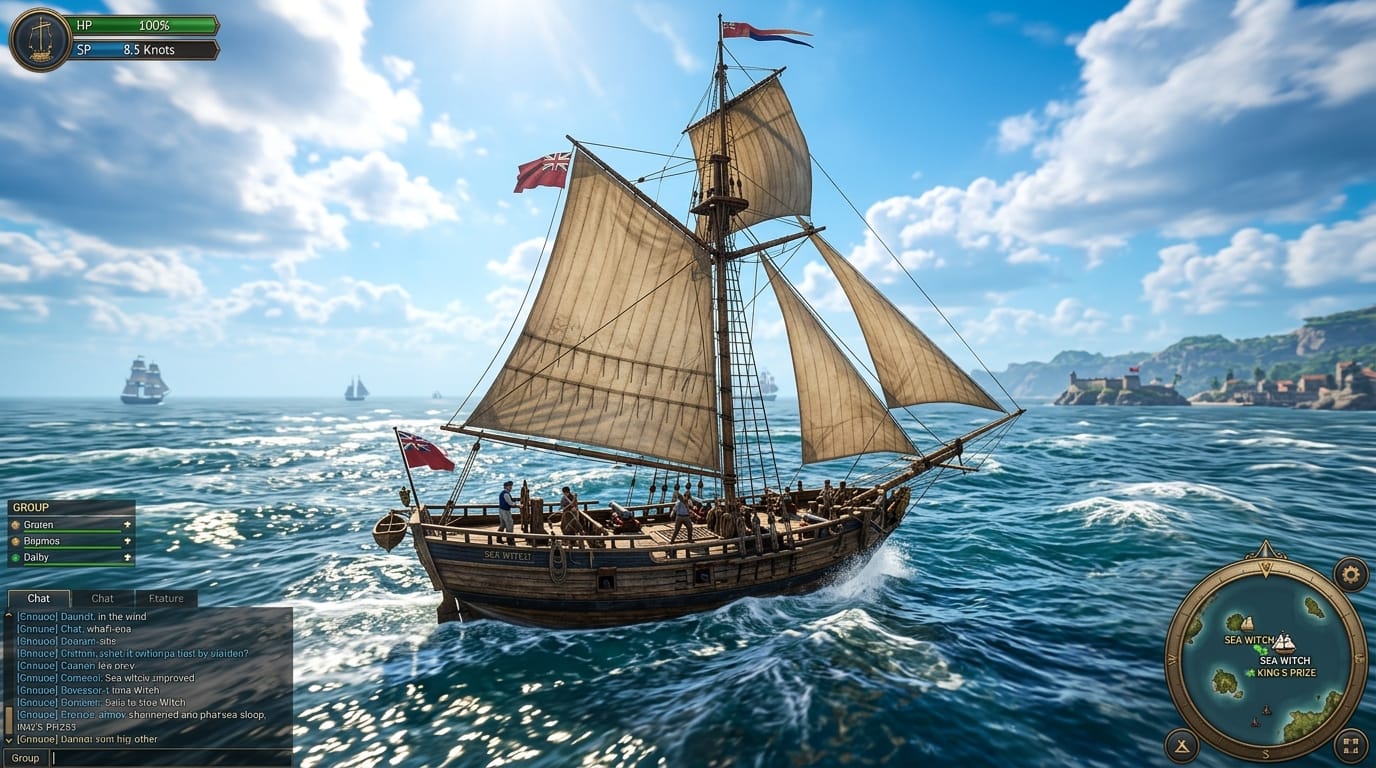
Your starter vessel is a basic sloop. It’s slow, it’s lightly armed, and it won’t survive a fight against anything remotely competent. Treat it as a learning tool. Use it to run the first three or four tutorial quests, learn how the wind system works, and get comfortable with manual aiming before you care about outcomes.
The first mission that actually pays well is usually a trade run to a nearby port. Complete it. The gold gives you a head start on your first real ship.
What actually worked for us: we ran three full trading cycles in our starter sloop before engaging in any PvP. By the time we entered our first proper fight we understood wind angles, port locations, and the exchange market. Players who skip this step spend their next two ships re-learning it the hard way.
How the sailing mechanics actually work
World of Sea Battle uses real wind mechanics. Your ship doesn’t move at the same speed in all directions, it moves fastest when the wind is at an angle to your sails and slowest when you’re sailing directly into the wind or directly downwind in some configurations.
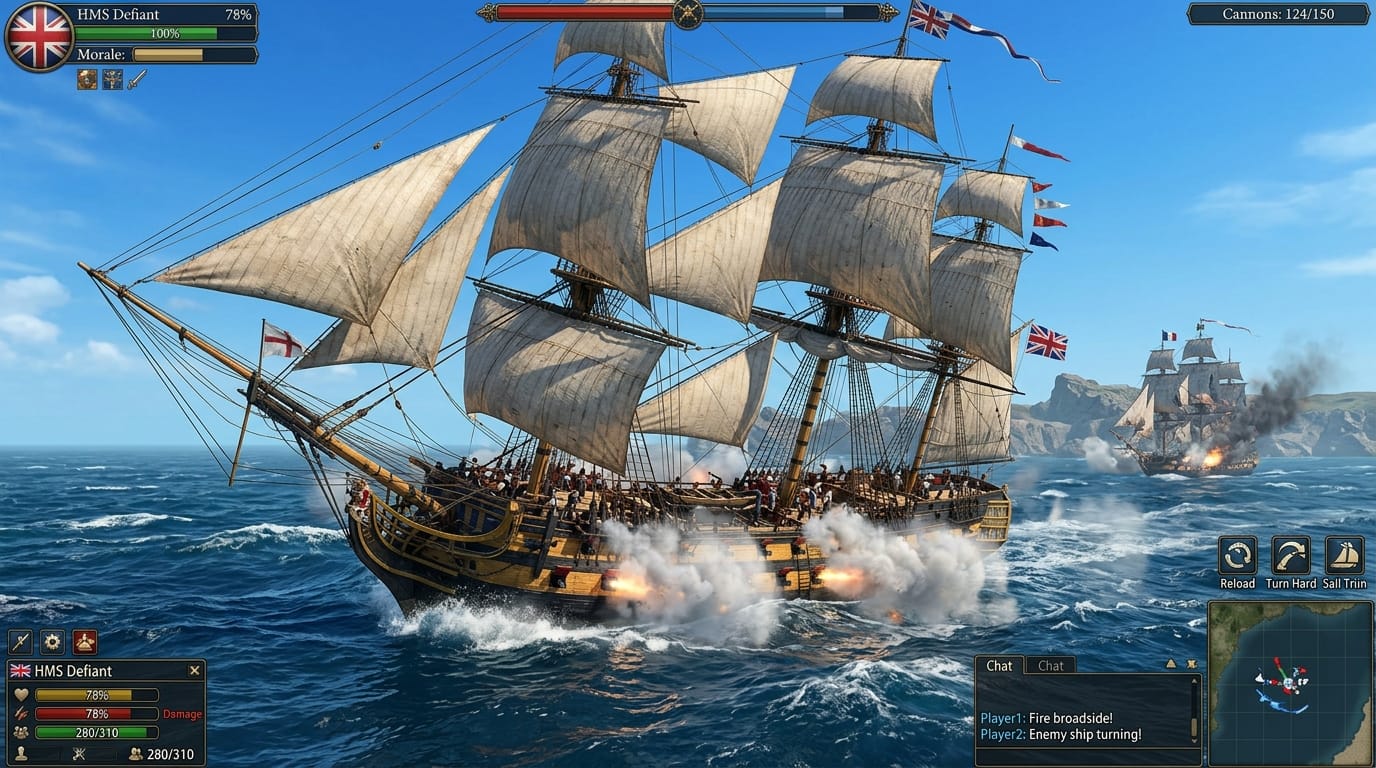
This matters more than it sounds. In combat, if you position your ship so the wind favors you and not your opponent, you gain a real tactical advantage. You can pull range, force the angle you want, or outrun a heavier enemy. Players who ignore wind mechanics get outmaneuvered constantly by people who understand them.
The practical basics: when the wind is behind you at a 45-degree angle to your heading, you’re in the fastest zone. When the wind is directly in front of you, your speed drops significantly. Learn to read the wind indicator on your HUD before anything else.
There’s no autopilot. You steer your ship yourself the whole time. That’s either the feature that makes this game feel real or the thing that frustrates you into quitting, depending on your patience. Give it a few sessions before you judge it.
How to earn gold fast as a beginner
Gold is the bottleneck in early-game progression. You need it for ship upgrades, cannon purchases, and eventually your first bigger hull. There are two reliable methods and one method that sounds good but doesn’t work well yet.
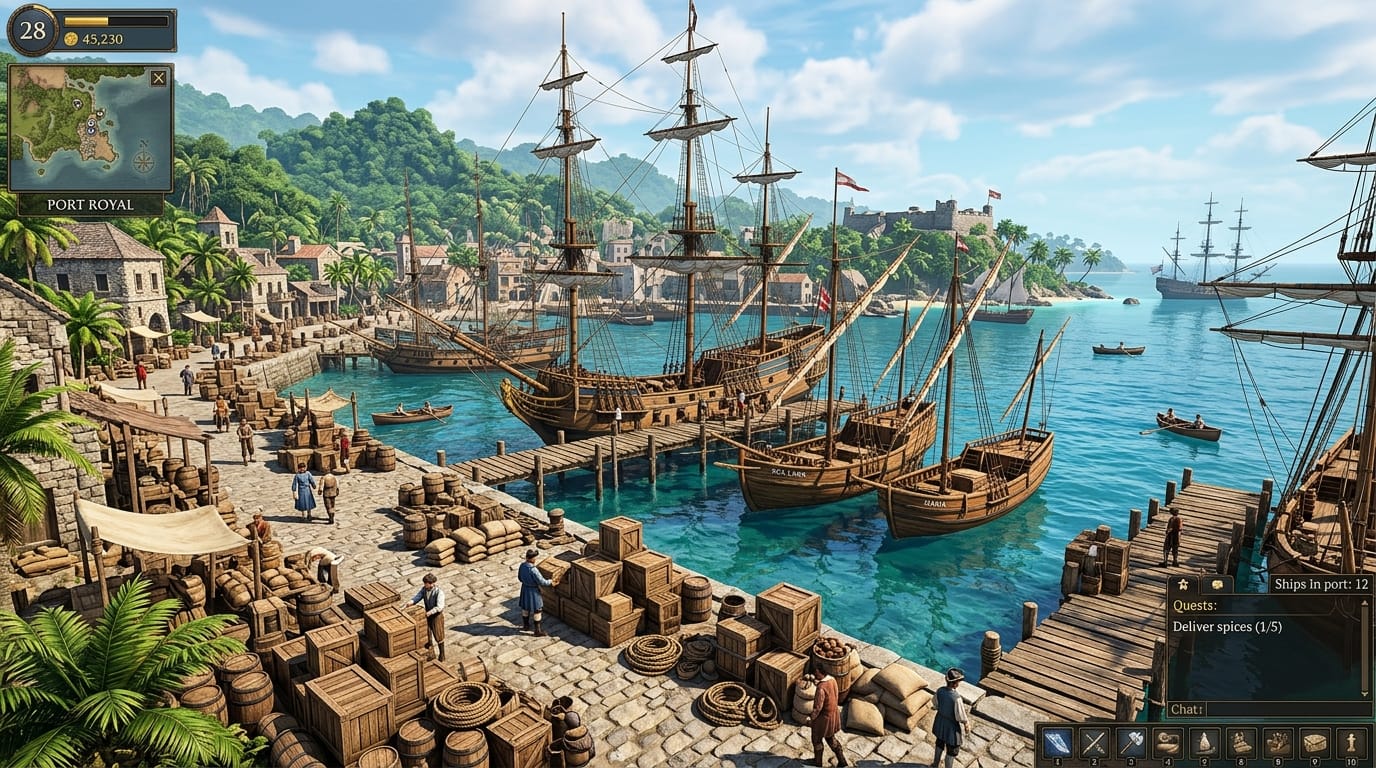
Trading routes for new players
Trading is the most consistent early gold source. Buy low-value goods at a port with high supply, sail to a port where that good shows high demand, and sell for profit. The exchange market tells you current prices at every port you’ve visited.
The margin on starter goods is small but safe. You’re not going to get rich on a single run, but you won’t lose your ship to a PvP ambush while you’re doing it either. Run five or six trade cycles in safe zones while you learn the map layout.
Which PvE quests pay the most
Tavern quests are the fastest gold per hour once you understand which ones to prioritize. Combat quests, sinking a set number of AI ships, pay well but require a capable ship to complete efficiently. Trade and exploration quests are lower risk and available from the start.
Check the tavern board in every port you visit. Quests refresh on a timer and the payouts vary. A good exploration quest can pay more than three small trade runs combined. Don’t sleep on them because they don’t involve combat.
What we noticed that most guides miss: the tavern quests in faction-controlled ports pay a reputation bonus in addition to gold. That reputation compounds over time into faction rank, which unlocks ship bonuses earlier than grinding reputation through combat alone. Running tavern quests is dual-purpose progression that most beginner guides don’t mention.
Starter ship progression: sloop to corvette to frigate
The ship progression in World of Sea Battle is one of its strongest design choices. You don’t spend months grinding toward your first viable PvP ship the way Naval Action makes you. In our experience, the path from starter sloop to a competitive frigate takes roughly 20 hours at a relaxed pace, faster if you focus.
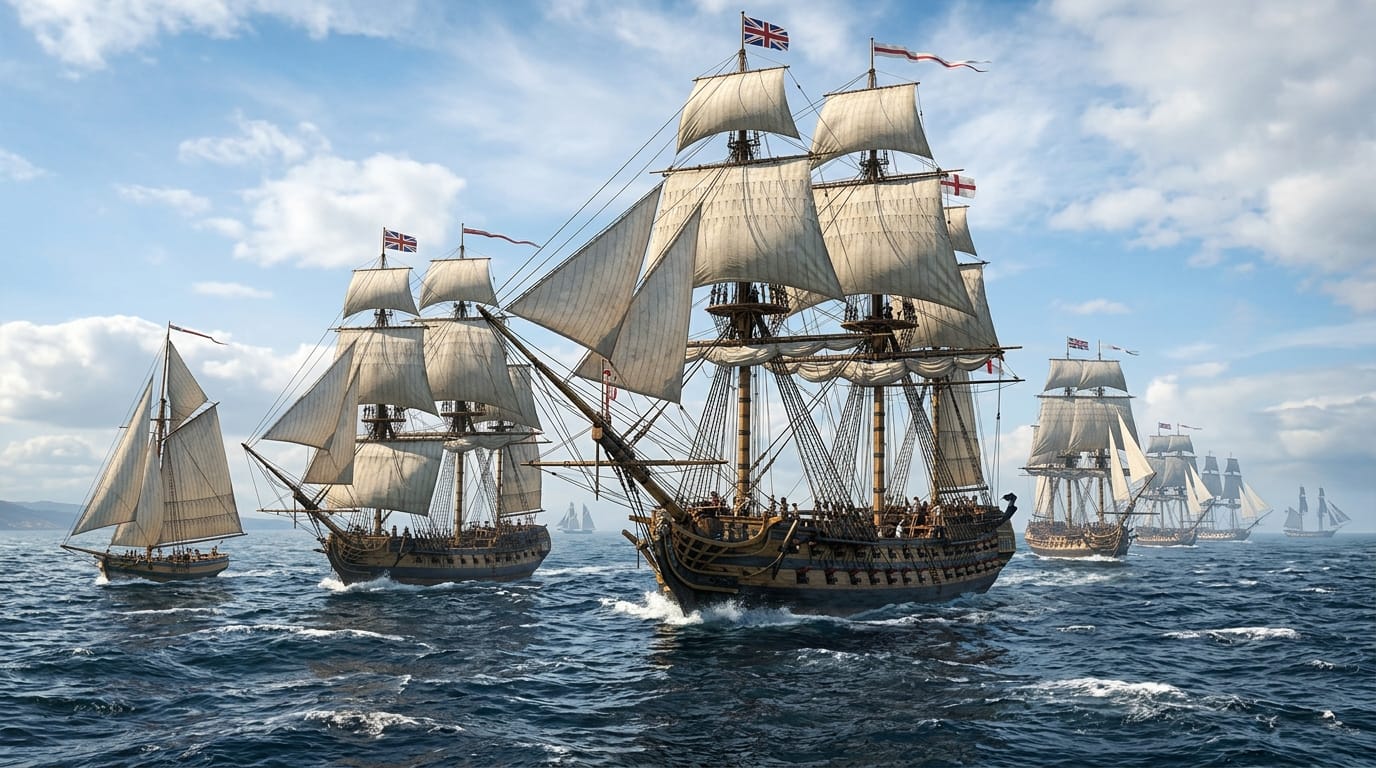
Sloop: your starting ship. Use it for tutorial content and initial trading only. Don’t try to PvP in it against experienced players. Get out of it as fast as reasonably possible.
Corvette: your first real ship. Corvettes are fast and agile. They’re good for PvP skirmishing, quick trading, and learning combat mechanics without committing to a slow-moving target. Most players spend the bulk of their early mid-game here.
Frigate: your first competitive platform. Frigates balance firepower and maneuverability in a way that lets you participate in most game content, open-world PvP, guild skirmishes, and some smaller port battles. Getting to a decent frigate is your first major milestone.
Galleon and war galleon: these are endgame ships for guild port battles. Don’t think about them until you’re deep into a guild and understand the port battle system.
How to avoid getting ganked in the open world
Some zones on the map are flagged as PvP-active. In those areas, other players can attack you without warning. As a beginner you want to stay in safer zones until your ship and your skills are ready for that.
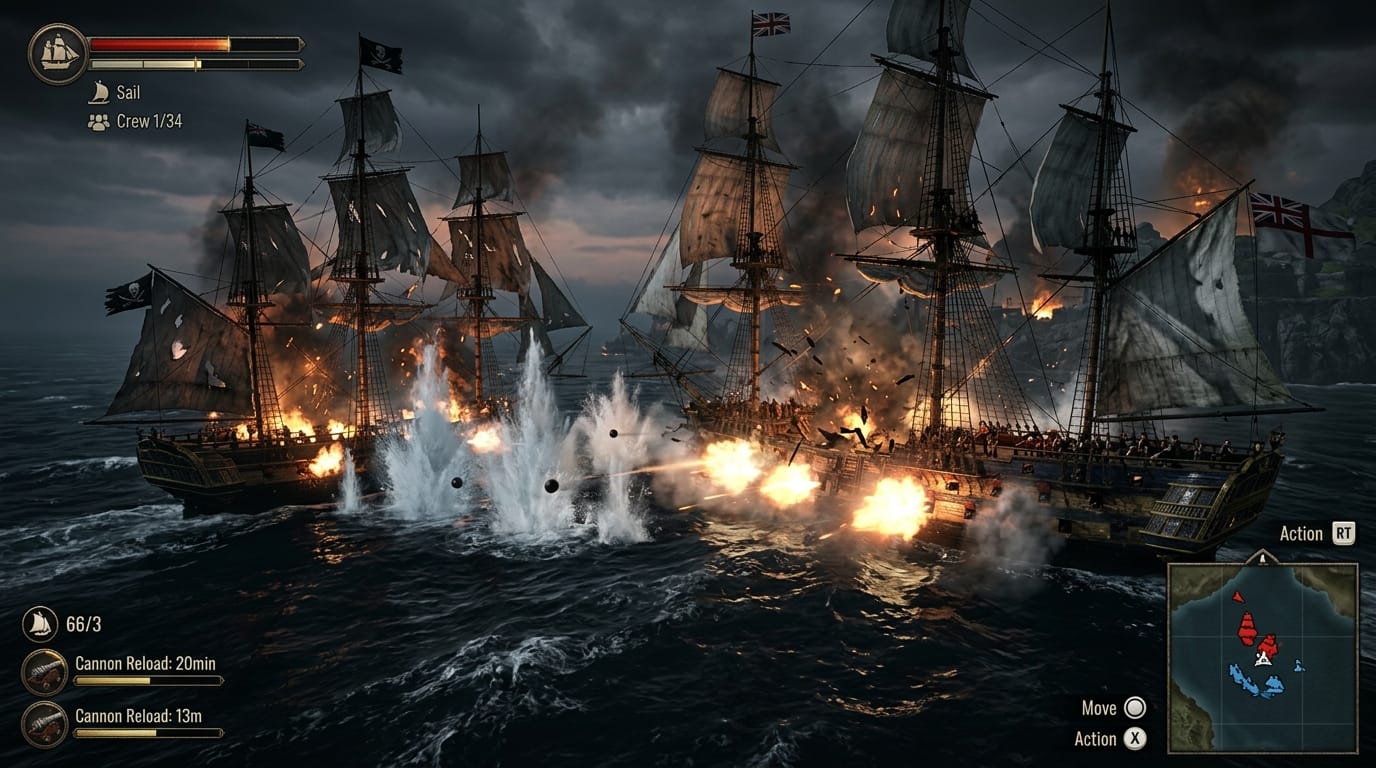
Check the zone status before sailing into unfamiliar territory. The HUD marks zone types. If a zone shows as contested or open PvP, either have an escort or take a route around it until you’re in a ship that can fight back.
The ganking problem is real. Experienced players in heavy ships do camp popular trading routes in PvP zones. The solution isn’t to avoid trading, it’s to use alternate routes, travel during off-peak server hours, or coordinate with a guild to have backup. Solo play in PvP zones with a loaded cargo hold is a coin flip at best.
Should you join a guild early?
Yes. The short answer is yes, join a guild as soon as you find one that will have you. Here’s why.
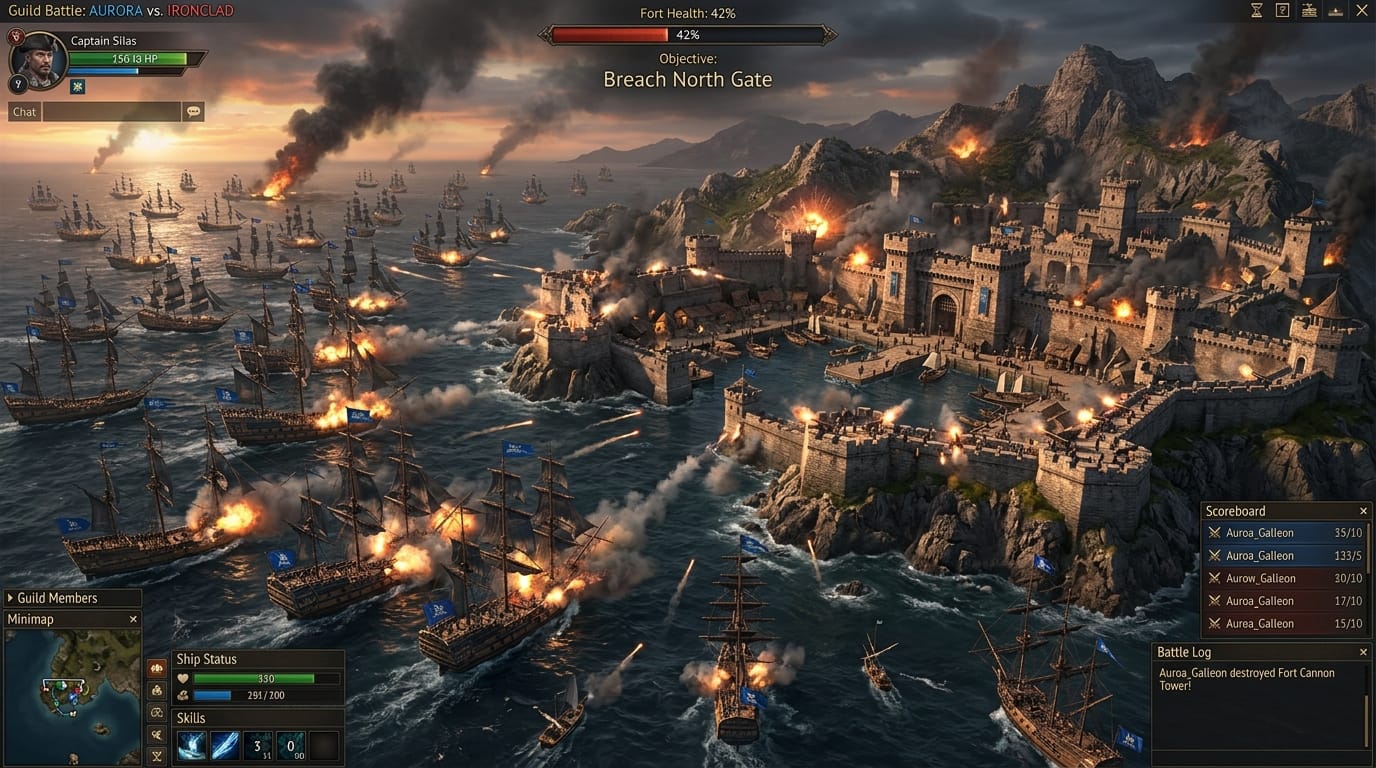
Guild membership gives you access to group quests that pay more than solo tavern quests. You get backup during PvP encounters. You learn the game faster because experienced players answer questions. And most importantly, the endgame content, port battles and territorial warfare, is completely guild-dependent. There’s no solo version of the endgame.
Look for a guild that runs regular tavern quest groups and has active members in your timezone. A large guild is less important than an active one.
[INTERNAL-LINK: our World of Sea Battle review covers the guild warfare endgame → main review covering port battles and territorial control]
Frequently asked questions
How long does it take to get a good ship in World of Sea Battle?
Most players reach a competitive mid-tier frigate in roughly 15 to 25 hours depending on playstyle. Focusing on tavern quests and trade runs is the fastest path. Players who spend early hours in PvP without a capable ship typically take longer because ship losses slow progression.
Is World of Sea Battle worth playing without spending money?
Yes, free-to-play players can access all core game content including combat, trading, and guild warfare. The power gap from premium ships is most noticeable in large-scale port battles during the endgame. For casual to mid-core players the free experience is fully functional.
What’s the best starter faction in World of Sea Battle?
Mechanically the factions are nearly identical in the early game. The practical answer is to pick whichever faction your friends or prospective guild belong to. If you’re starting completely solo, look for the faction with the most active territory on your server at the time you join.
Can you play World of Sea Battle solo?
Yes for the early and mid-game. The endgame, port battles and territorial warfare, is built around guilds and requires coordinated groups. Solo players who avoid guild content will hit a natural ceiling around the mid-game and find fewer reasons to keep progressing.
Does World of Sea Battle have a steep learning curve?
The sailing mechanics and manual steering require a few hours to get comfortable with. The aiming system is intuitive if you’ve played World of Warships. The economy and trading system have a short learning curve. Overall it’s more approachable than Naval Action but less guided than most modern MMOs.
Conclusion
World of Sea Battle has one of the better core gameplay loops in the free-to-play naval MMO space right now. The problem isn’t the game, it’s that nobody explains the starting systems clearly. Run the tutorial quests. Learn the wind. Do three or four trade runs before you fight anything. Join a guild by hour 10.
Follow those four steps and you’ll have a completely different first-week experience than the average new player who quits in frustration.
Once you’re settled in and looking for your next upgrade, check out our guide to the best ships in World of Sea Battle to plan your progression path.

Allen Wade is a Senior PC Hardware & Performance Analyst at PerfCore with over 8 years of experience benchmarking CPUs, GPUs, gaming laptops, and system architectures. He specializes in 1080p and 1440p frametime analysis, thermal dynamics, and budget component optimization. Allen’s hardware testing methodology relies on standardized test benches, repeatable CapFrameX frametime captures, and clean OS environments.