
World of Sea Battle ship guide: the best ships for PvP, trading, and port battles
Which ships are worth grinding in World of Sea Battle? Our 2026 ship guide covers the best corvettes, frigates, galleons, and premium ship evaluation.

Picking the wrong ship in World of Sea Battle does not just make you lose fights. It slows your progression, wastes your gold, and puts you in situations where the game feels unfair when it is actually just a matchup problem. The ship system looks simple on the surface, five classes with bigger meaning more firepower, but the real depth is in cannon loadouts, class roles, and knowing which hull to grind toward for your specific playstyle.
This guide breaks it down. We cover every ship class, our picks for the best vessels in each category, and an honest look at whether premium ships are worth the money.
Before reading this, if you have not decided whether to start playing yet, our full World of Sea Battle review gives you the complete picture.
Key Takeaways
– World of Sea Battle has over 60 ships divided into five main classes with distinct combat roles
– Frigates offer the best balance between firepower and maneuverability for most players
– Cannon loadout matters more than hull class at high levels, two frigates with different cannon configs play completely differently
– Premium ships reach competitive power levels faster but skilled free players can match them through grinding
– War galleons dominate port battles but are nearly useless in open-world PvP due to poor speed
You can check the World of Sea Battle Steam page to view player reviews, patch notes, and current server status before jumping into your first vessel.
Table of Contents
How the World of Sea Battle ship class system works
World of Sea Battle organizes ships into five main classes. Each class has a distinct role in the game’s three main activities: open-world PvP, trading, and guild port battles. Understanding these roles before you grind prevents the common mistake of working toward a ship that does not suit what you actually want to do.
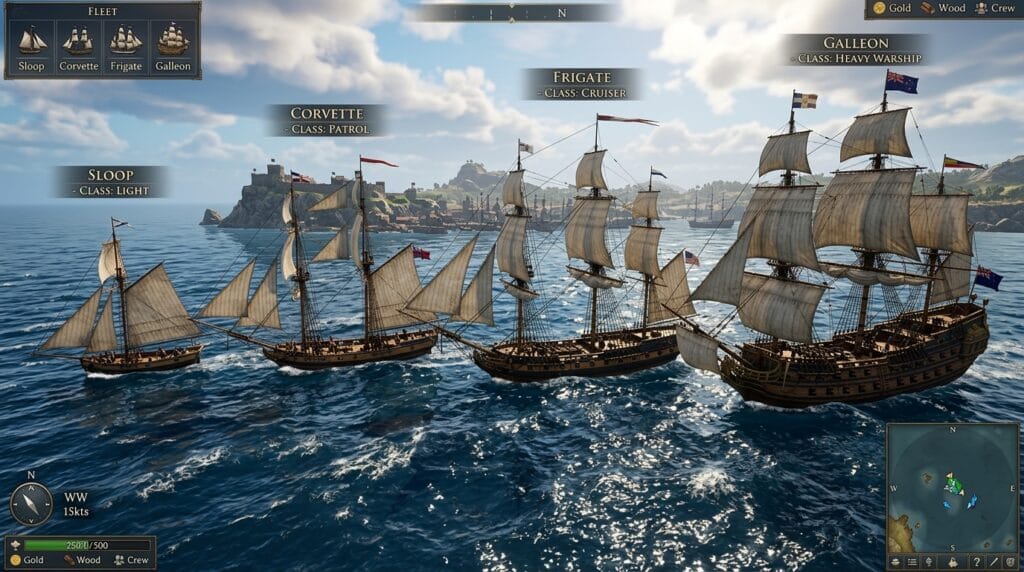
The five classes are sloops, corvettes, frigates, galleons, and war galleons. They do not just differ in size, they differ in core purpose. A war galleon sitting still in open-water PvP is a slow-moving target. That same ship in a coordinated port battle with fleet support is the most powerful platform in the game.
Ship stats explained: speed, firepower, and survivability
Every ship has three core stats that determine its role.
Speed is how fast the ship moves with favorable wind. High speed lets you dictate engagement range: you chase or flee as the situation demands. Fast ships control the fight. Slow ships absorb damage and hope their armor holds.
Firepower is raw damage output per broadside. Higher firepower means more damage per salvo but typically comes with slower cannon reload and heavier weight. Firepower is most important in port battles where engagements are sustained rather than quick skirmishes.
Survivability is effective health, hull strength combined with armor values. Tanky ships can absorb more punishment before boarding becomes viable. Low survivability ships need to win fights quickly before getting overwhelmed.
How cannon loadouts change a ship’s role
This is the detail most beginners miss. Two frigates with the same hull but different cannon configurations play nothing alike. A frigate loaded with long-range bow chasers excels at kiting and picking off individual targets at distance. The same frigate loaded with heavy short-range carronades becomes a brawler that needs to close distance and deliver massive damage at point-blank range.
Cannon slot positions matter too. Bow chasers fire forward, stern chasers fire backward, and broadside batteries fire to the sides. The angle coverage you get depends directly on where your cannons sit. Before you outfit a new ship, decide whether you are building for range, brawling, or boarding support.
What most guides don’t explain: the effective firing arc of a cannon matters as much as its damage stat. We tested the same frigate hull with three different cannon configurations and found that a bow-chaser-focused build could land 40% more shots per engagement on a fleeing target than a pure broadside build, even though the broadside build had 30% higher raw firepower on paper.
Best beginner ships to grind toward in World of Sea Battle
If you are still in the first 10 hours of the game, your ship goals are simple. You want to get out of the starting sloop and into something that can participate in real combat without being an automatic loss.
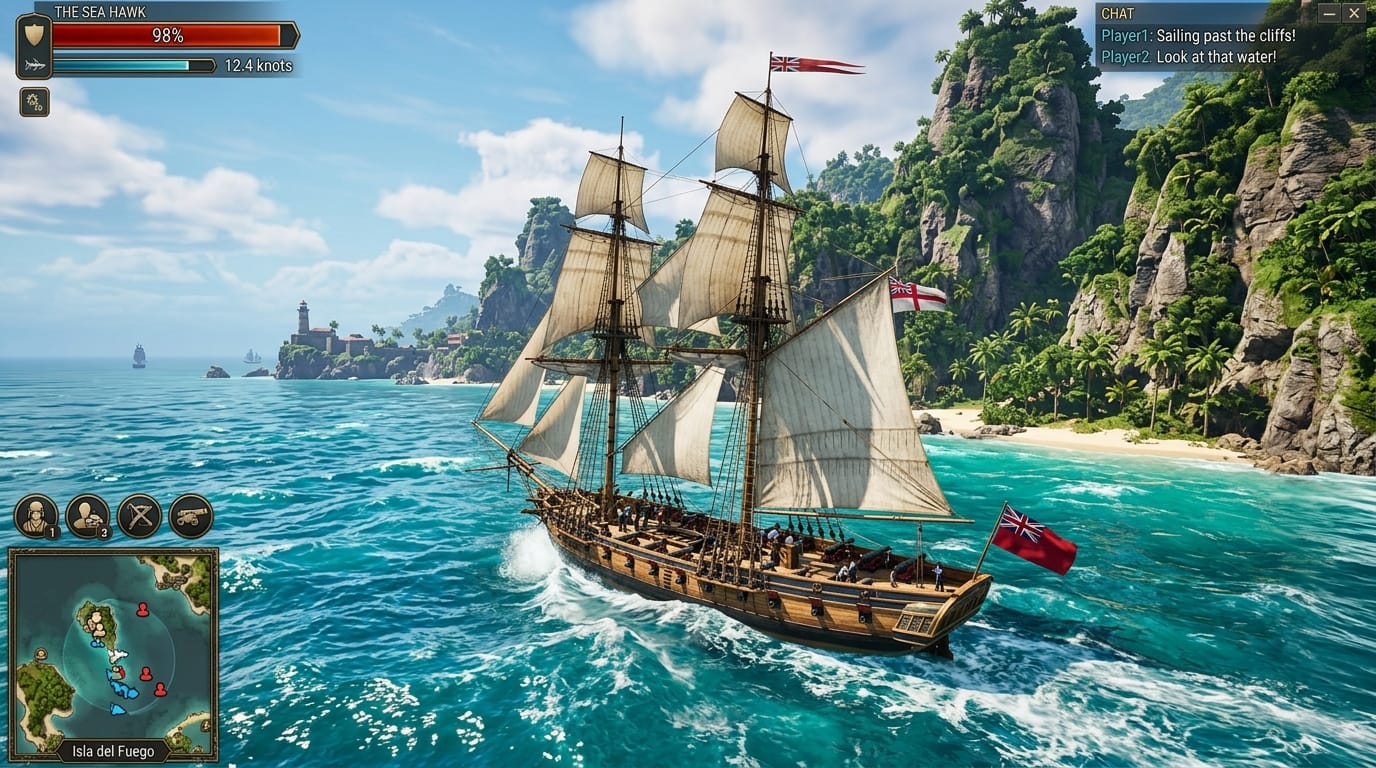
Best early-game target: light corvette. Fast enough to avoid fights you cannot win, capable enough to win fights you do take. The light corvette is the first ship where your skill starts mattering more than your gear. Most of the tactical fundamentals, wind positioning, range management, when to board, become relevant here in a way they are not in a sloop.
Best mid-game target: medium frigate. This is where World of Sea Battle opens up. A medium frigate can do everything: trade under escort, participate in guild skirmishes, and hold its own in open-world PvP against most opponents. If you are a solo player who mostly does PvP and trading, the medium frigate tier is where you will spend most of your time.
If you are just getting started on your journey, check out our beginner guide to World of Sea Battle for the fastest gold farming and progression routes.
Best ships for PvP and open-world combat
Open-world PvP rewards speed and maneuverability more than raw firepower. In a one-on-one fight, the player who controls the engagement range usually wins. That means fast ships with flexible cannon options beat slow ships with more guns in most open-water scenarios.
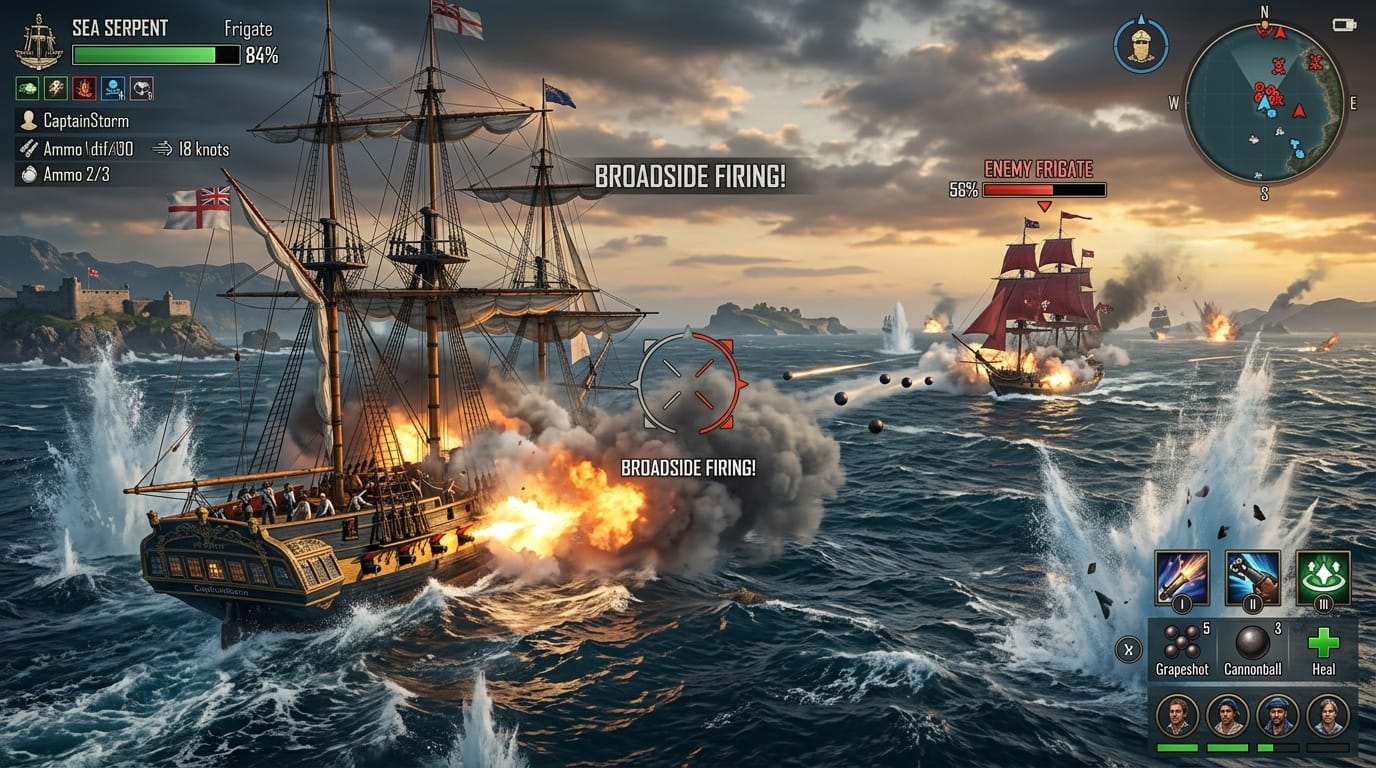
Best corvette for PvP skirmishing
The corvette class is built for PvP. Specifically, fast corvettes with bow-chaser cannon builds can chase down traders, escape galleons, and dictate the terms of any engagement. In 1v1 PvP below the frigate tier, a skilled corvette player is genuinely difficult to beat.
What to build: prioritize speed upgrades and a bow-chaser cannon arrangement. Your goal is to stay at range while your opponent burns time trying to close the gap. Do not try to brawl a galleon in a corvette. You will not win.
Best frigate for balanced PvP
At the frigate tier, you have enough durability to survive mistakes and enough firepower to punish opponents. The best PvP frigates balance medium speed with strong broadside output and decent survivability.
The sweet spot is a frigate with speed that lets it choose its engagement angle combined with carronade-type cannons for medium-range broadside damage. You are not kiting like a corvette, but you are not tanking damage like a galleon either. You win fights by controlling position.
After 40+ hours in the game across multiple ship types: the medium frigate with a mixed cannon arrangement, some long-range bow chasers to open at distance, heavy broadsides to finish close, gave us the most wins per hour in open-world PvP. The all-carronade frigate hits harder in brawls but runs into trouble when faster ships kite it.
Best ships for guild port battles in World of Sea Battle
Port battles are a different game from open-world PvP. They are coordinated, large-scale, and they favor sustained firepower and survivability over speed. The fleet that lands more damage over a 20-minute battle wins, not the fleet with the fastest individual ships.
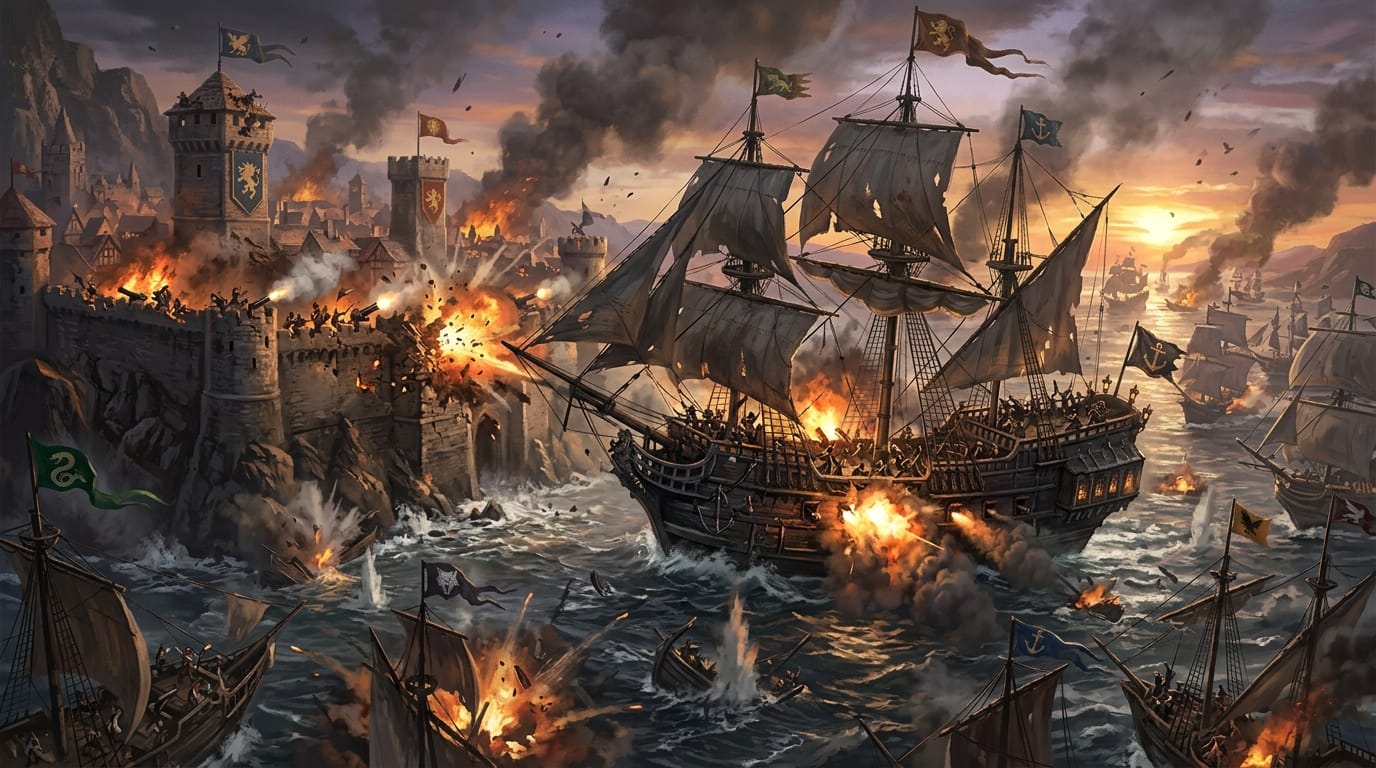
Why galleons dominate port battles
Galleons are slow, which makes them targets in open-water PvP. In port battles that problem goes away because everyone is fighting in a defined area and nobody is running. In that environment, a galleon’s massive broadside firepower and high survivability become dominant.
Fleet positioning in port battles matters more than individual ship performance. A galleon in a bad position is still a liability. But a galleon in a coordinated fleet formation, with faster ships screening the flanks, is the most effective platform in the game.
War galleon overview
War galleons are the hardest-hitting ships in World of Sea Battle. They are built exclusively for port battles and large guild warfare engagements. Outside of that context they are impractical to use, too slow to trade safely, too big to maneuver in most open-water fights.
If your guild runs regular port battles and you are playing a support damage role, a war galleon is your end goal. If you are primarily a solo or small-group player, the gold investment is better spent on a high-quality frigate.
Best ships for trading and cargo runs
Trading ships need survivability and cargo capacity, not combat performance. You do not want to win fights in a trader, you want to survive long enough to either escape or be saved by an escort.
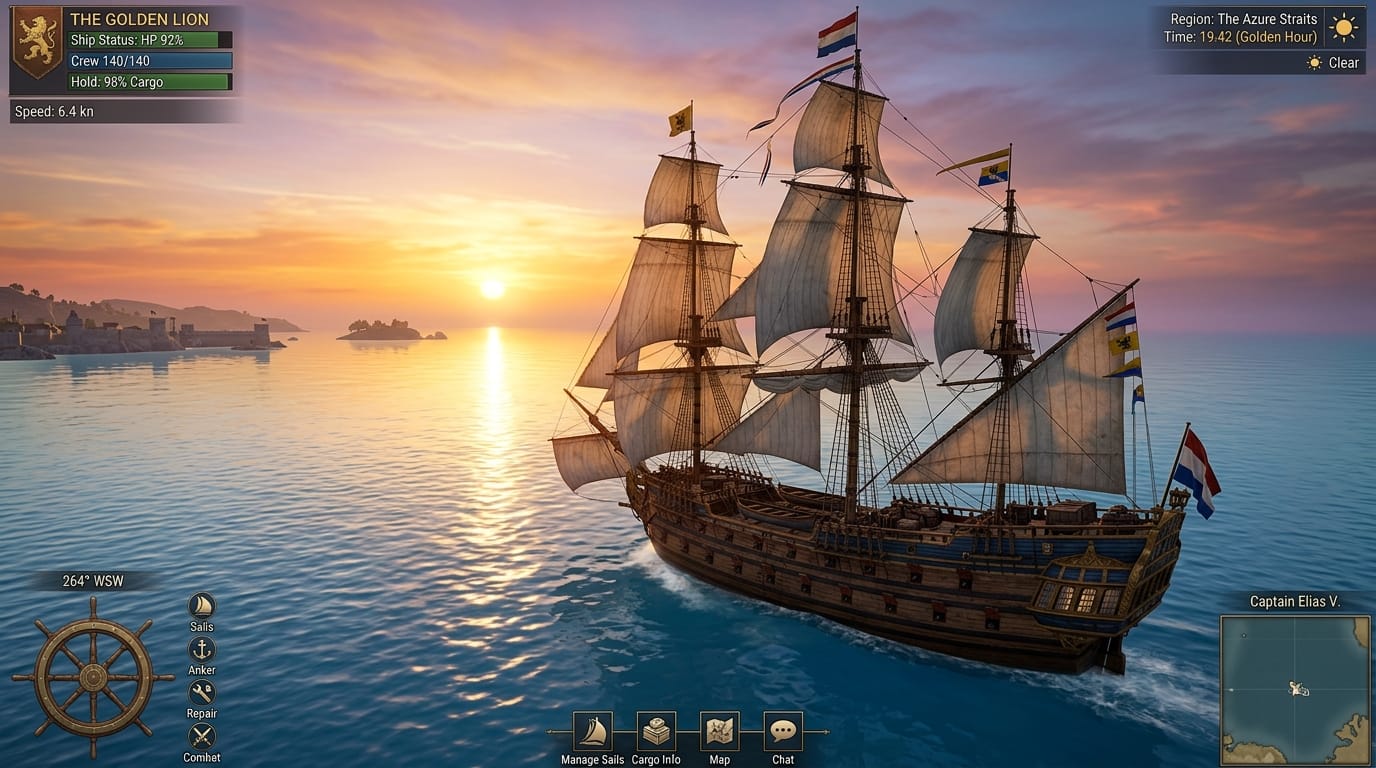
Best trading ship class: galleon. Regular non-war galleons combine decent cargo capacity with enough guns to discourage casual attacks from smaller ships. A lightly armed frigate will think twice before attacking a galleon with defensive cannons loaded. A corvette will not.
The key for trading is route selection more than ship selection. Avoid PvP zones with loaded cargo. If you must cross contested territory, travel in groups or during off-peak hours when PvP traffic is lower.
Are premium ships worth it in World of Sea Battle?
This is the question that drives most of the pay-to-win debate in the community, and the honest answer is: it depends on what you are trying to accomplish.
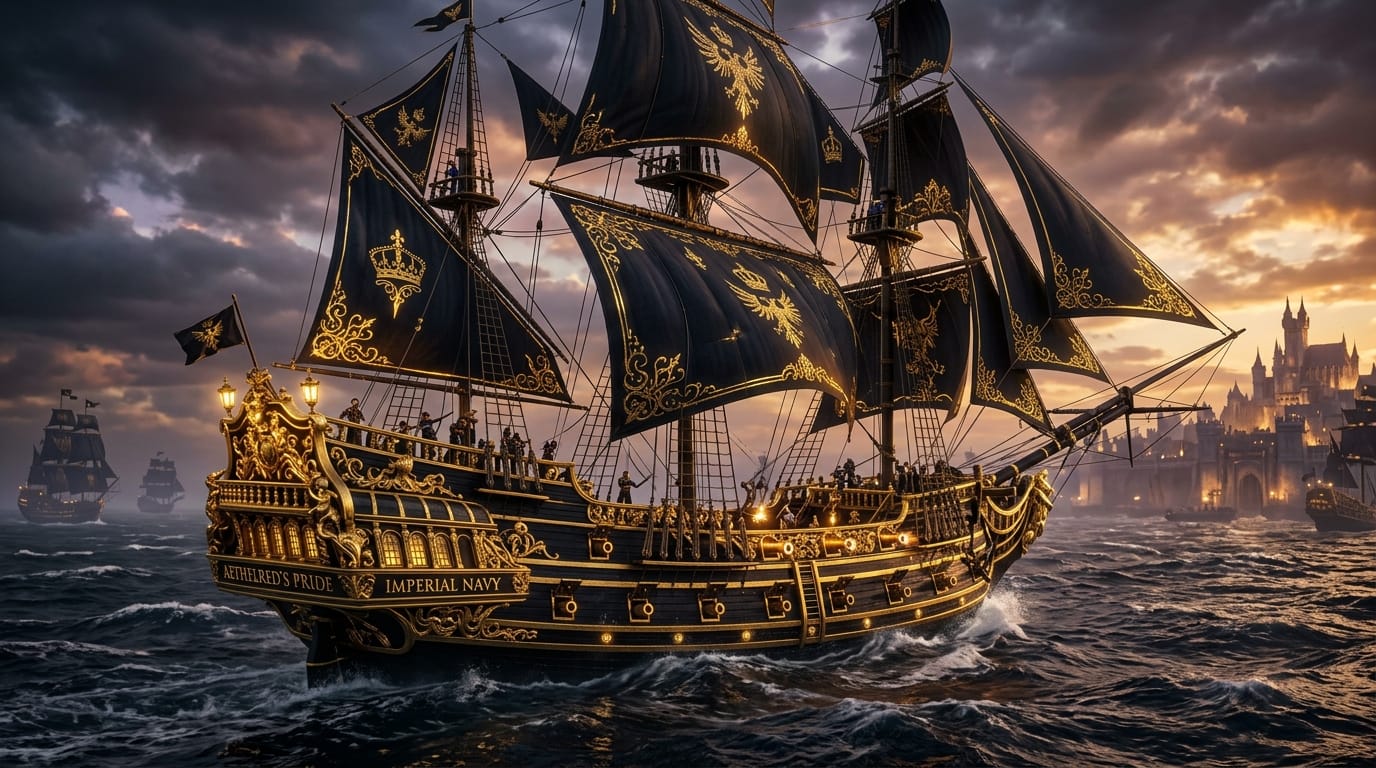
Premium ships reach competitive power levels faster than free ships at the same class tier. If you buy a premium frigate, you skip some grinding time and enter competitive PvP earlier. That is real value and it is worth calling what it is, a progression shortcut.
What premium ships do not do is make you unbeatable. A skilled free-to-play player in a well-optimized mid-tier frigate can beat an average premium ship player in a higher-tier vessel. The power gap is real but it is not an impassable wall.
The situation where premium ships feel most unfair is large-scale guild port battles. In that environment, coordinated groups of premium war galleons have a noticeable statistical advantage over equivalent free-to-play fleets. If that is the content you care about most, the monetization will frustrate you.
Our assessment: premium ships are worth buying if you treat them as a time purchase, you are paying to skip grinding, not to win automatically. If you enjoy the grinding process and have the patience for it, free-to-play is fully viable for everything except the highest tiers of competitive guild warfare.
For a full breakdown of the monetization model and how it affects the overall game experience, see our complete World of Sea Battle review.
Frequently asked questions about World of Sea Battle ships
What is the best ship in World of Sea Battle for a beginner?
For beginners, the light corvette is the best first upgrade target after the starter sloop. It is fast enough to avoid fights you cannot win, capable enough in combat to learn real skills, and cheap enough to replace without major setback if you lose it in PvP. Aim for a medium frigate as your second major milestone.
Are there ship skill trees in World of Sea Battle?
Yes. The B19 New Horizon update introduced unique ship skills for Imperial-class vessels (detailed on the official World of Sea Battle website), and the 2026 roadmap includes expanded faction-specific ship skill systems in upcoming updates. Skills are tied to specific ship hulls and let you specialize the role of each vessel beyond basic cannon loadouts.
How many ships are in World of Sea Battle?
World of Sea Battle offers over 60 customizable ships as of mid-2026. Ships span five main classes, sloops, corvettes, frigates, galleons, and war galleons, with multiple hull variants within each class offering different stat distributions and cannon slot layouts.
Can you lose your ship permanently in World of Sea Battle?
Yes. Ship loss is permanent in World of Sea Battle. When your ship is sunk, you lose the vessel. Cannons and some modules can be recovered depending on the circumstances. This makes risk management an actual gameplay mechanic, sailing a heavily equipped ship into dangerous territory without backup is a real gamble.
Is the ship progression too grindy?
Compared to Naval Action, the progression is significantly faster. Most players reach a competitive frigate in 15 to 25 hours. Compared to modern MMOs with streamlined onboarding, it is longer. Whether it is too grindy depends on your tolerance for grind, the progression is noticeable but not punishing relative to the genre.
Conclusion
Ship choice in World of Sea Battle matters more than most new players realize, but it matters in a specific way. The hull class is a starting point, the cannon loadout and your positioning decisions determine whether you actually win fights. Understanding the role of each class before you grind for it saves you weeks of frustration.
For most players: run corvettes until you understand the combat system, graduate to frigates for your main endgame loop, and only chase galleons or war galleons if guild port battles are your primary focus.
If you are still in the early stages of the game, check out our beginner’s guide to World of Sea Battle for the fastest route to your first competitive ship.

Allen Wade is a Senior PC Hardware & Performance Analyst at PerfCore with over 8 years of experience benchmarking CPUs, GPUs, gaming laptops, and system architectures. He specializes in 1080p and 1440p frametime analysis, thermal dynamics, and budget component optimization. Allen’s hardware testing methodology relies on standardized test benches, repeatable CapFrameX frametime captures, and clean OS environments.
This post contains affiliate links. If you make a purchase through these links, we may earn a commission at no extra cost to you.