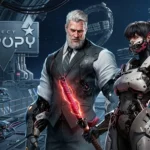

Arknights: Endfield. This is a new Chinese gaming hit everyone is waiting for

In January already it’s sitting near the top of the “gacha game of the year” conversation, which is wild when you think about how packed this genre usually is.
Arknights: Endfield was officially released on January 22, 2026 at 10:00AM
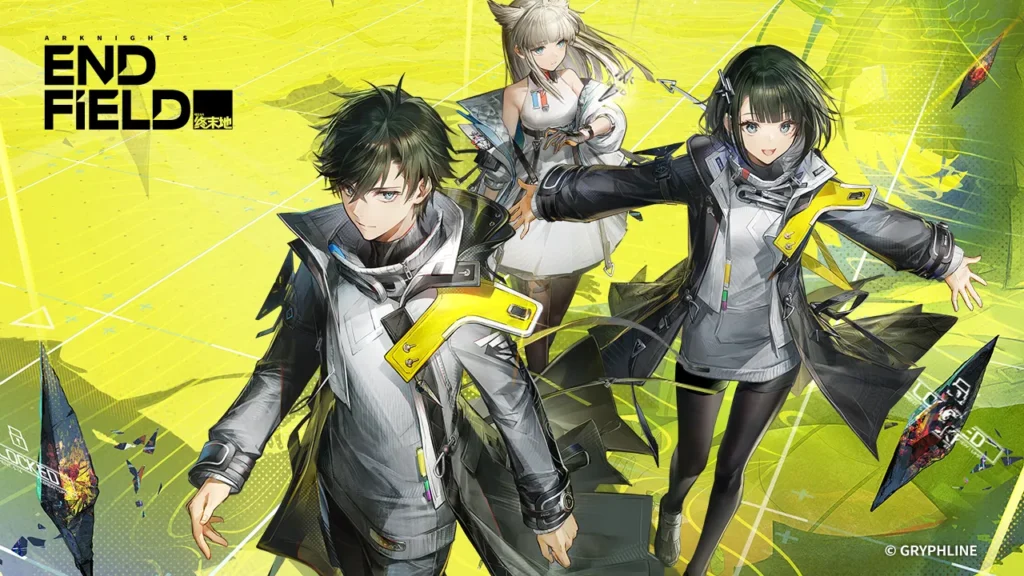
On January 22, developers at Hypergryph dropped their most ambitious project yet: Arknights: Endfield. It’s a spin-off of Arknights, a game that’s been absurdly successful across Asia and has quietly built a very serious global fanbase too.
But Endfield isn’t just “Arknights, again.” It does something most gacha games either avoid entirely or completely botch: city building. Real, systems-heavy, actually-matters city building. Not just menus and timers slapped onto a pretty map.
In this article, I’ll walk you through what Arknights: Endfield actually is, why people are already so hyped about it, and whether it’s shaping up to be more than just another flashy gacha release with a big IP attached.
Contents
show
Arknights: Endfield: key facts about the game
- Title: Arknights: Endfield.
- Platforms: PC, PS5, iOS.
- Developers: Hypergryph.
- Release date: january 22, 2026.
- Genre: role-playing game with city-building elements.
Arknights: endfield review
Arknights: Endfield was officially released on January 22, 2026 at 10:00AM
Setting and story premise
The game takes place on Talos II, which is about as welcoming as the name suggests. It’s a brutal frontier planet settled by pioneers from Terra more than 150 years ago, back when interstellar travel still worked as intended. Then the portal linking Talos II to the home world exploded. No backup plan. No rescue. Just silence.
What followed was a long, miserable scramble for survival. The biosphere is openly hostile, natural disasters are a regular occurrence, and organized gangs roam around doing what organized gangs usually do when society collapses. It’s less “bold new world” and more “how are we still alive?”
You play as the Endministrator, a legendary operative tied directly to Endfield Industries the megacorp-slash-governing-body that’s trying to keep civilization from completely face-planting. You wake up after ten years in cryogenic sleep, immediately ticking the classic RPG box of “protagonist with amnesia.” You remember nothing. Everyone else, inconveniently, remembers you. And they’re ready to put you back to work.
From there, the story does what it does best: drip-feeds answers while throwing bigger problems at you. You’re recovering lost memories, poking at the roots of a planet-wide crisis, and managing the fallout from disasters that literally reshape the landscape. Civilization isn’t just rebuilding it’s constantly being knocked back down, and you’re the one expected to keep it moving forward anyway.
Narrative delivery leans hard into big cinematic cutscenes, backed up by plenty of conversations with companions. Tonally, it’s full-on space opera: political maneuvering, ancient technology that probably shouldn’t be touched, and multiple factions all convinced they’re the least wrong option. The main campaign alone is a serious time investment roughly 40 to 60 hours and that’s before you wander off into side content (which you absolutely will).
All of your characters eventually gather in a central hub, either at a base or aboard a ship. This is where you chat, dig into backstories, and nudge relationship levels upward. Don’t expect something on the level of old-school party-based RPGs, though. The social side is fairly light useful, sometimes charming, but clearly designed to support combat and production systems rather than steal the spotlight.
It works. Just don’t come in expecting a dating sim.
Combat system and squad management
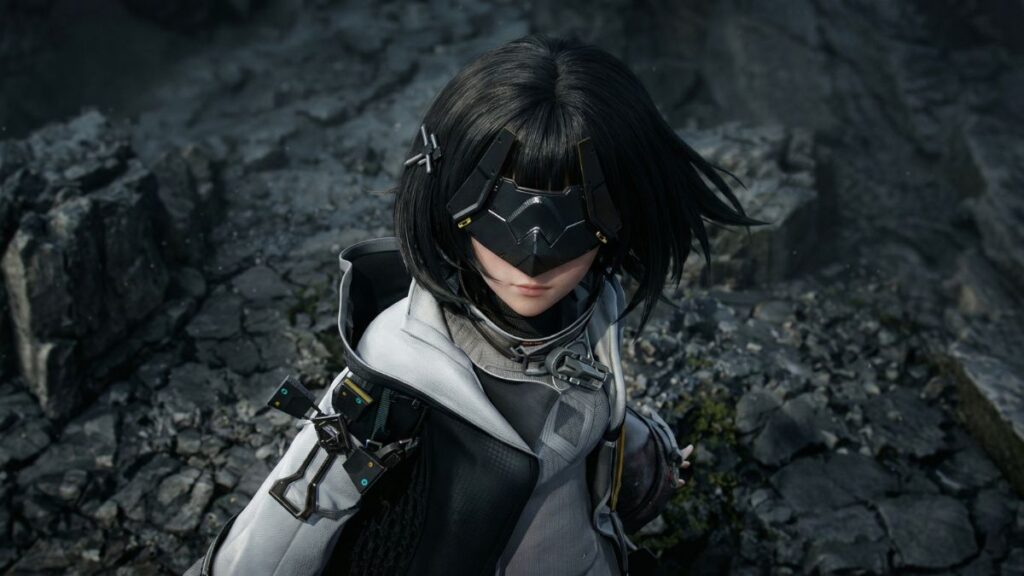
Combat in Arknights: Endfield is fully real-time, and right away it does something most gacha RPGs chicken out on: your entire four-person squad is on the field at the same time. No tag-in animations. No disappearing party members. Everyone’s there, fighting, getting hit, and occasionally saving you from your own bad decisions.
You directly control one operator, while the other three are AI-driven. They’ll attack on their own and use basic abilities without needing babysitting. And if you suddenly realize you’re controlling the wrong character for the situation? You just switch. Instantly. No cooldown, no drama. That alone makes the combat feel far more responsive than it has any right to be.
Everything revolves around a stagger system. Enemies have a stability gauge, and your goal is to chew through it by combining normal attacks and abilities in smart ways. Crack that gauge, and the enemy enters a broken state where damage ramps up fast. That’s your window—miss it, and fights drag on way longer than they should.
Each operator comes with their own element and combat role tank, support, damage dealer, the familiar trio but Endfield actually expects you to care about how they interact. Elements trigger reactions, abilities chain into one another, and certain characters exist purely to set the stage for someone else’s big moment. It’s less about raw stats and more about sequencing, which I didn’t expect from a game with gacha roots.
Abilities are split into basic attacks, active skills, and ultimates, but the strongest moves usually come with strings attached. Maybe an enemy needs a specific debuff first. Maybe another operator has to act before the payoff lands. When you line things up properly, you can roll from one attack into the next without spending extra resources and when that loop works, it feels fantastic.
All of this makes the combat surprisingly tactical. You can absolutely mash buttons against weaker enemies and get away with it. Bosses, though? They don’t tolerate that nonsense. Positioning matters. Timing matters. Rotations matter. Ignore any of that, and the game will politelybbut firmly wipe the floor with you.
It’s hectic, but not sloppy. And that balance is harder to pull off than it looks.
Gacha mechanics
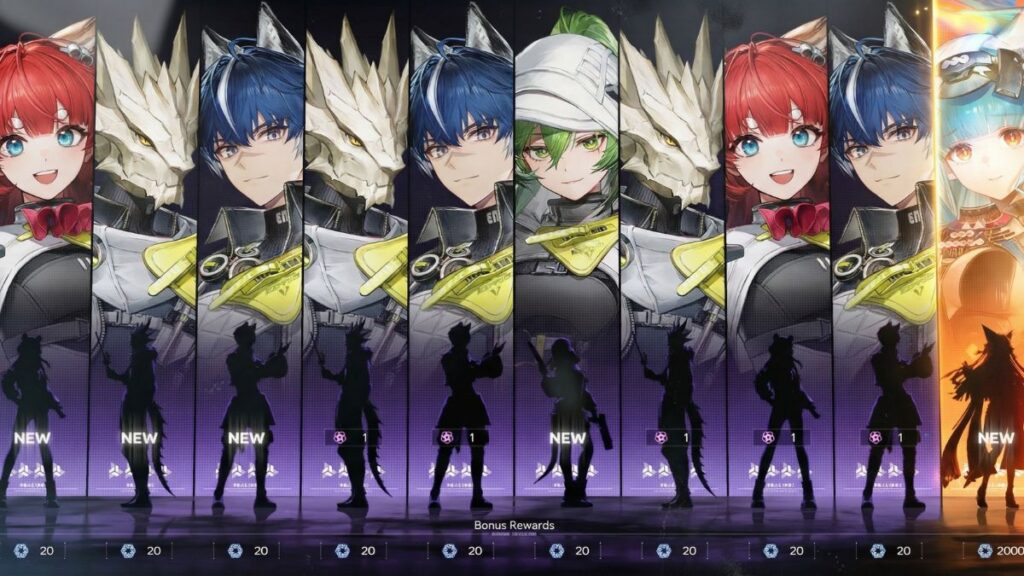
Arknights: Endfield is free-to-play, and yes, it’s absolutely a gacha game. If you’ve spent any time with the genre, none of that will shock you. You pull on banners to get characters, and those characters come with their own signature weapons. At launch, there are more than 20 playable operators, all drawn from the series’ familiar lineup of anthropomorphic animal races. Cat people, dog people, fox people. You know the vibe.
So far, so normal.
Here’s the thing, though: Hypergryph didn’t just copy-paste a standard gacha system and call it a day. They’ve layered in enough quirks and exceptions that you actually have to stop and think about how you’re pulling, which is… refreshing? Annoying? A bit of both, honestly.
Getting a top-tier character isn’t as clean as it is in most other gacha games. On paper, a six-star operator is guaranteed after 80 pulls. Fine. That’s familiar territory. But if you lose the 50/50 at that point (and you probably will, because gacha), the game doesn’t immediately hand you the unit you wanted. Instead, that six-star is guaranteed somewhere within the next 40 pulls. So now you’re doing math in your head and wondering how much currency you really want to commit to this banner.
It gets messier. After 30 pulls, the game gives you 10 free pulls nice! except those pulls don’t count toward pity. Unless you hit 60 pulls total, at which point those free ones suddenly do count. I had to reread that a couple times to make sure I wasn’t missing something, and even then it feels like one of those systems you only truly understand after accidentally messing it up once.
And just to keep you on your toes, pity doesn’t always carry over between banners. Sometimes it does. Sometimes it doesn’t. Planning long-term pulls is less about strategy and more about carefully reading fine print and hoping you didn’t misunderstand it at 1 a.m.
Weapons are a whole separate beast. You don’t pull them with the same currency you use for operators, which initially sounds great. Instead, when you roll on character banners, you earn special tokens that can be exchanged for weapons. You also pick up those tokens by actually playing the game clearing activities, exploring the map, doing stuff that isn’t just staring at a banner screen and praying.
I actually like this part. It ties weapon progression to real gameplay instead of pure luck, which feels fairer, or at least less cruel. You’re still engaging with gacha systems, sure, but you’re not completely locked out if RNG decides to hate you that day.
Overall, Endfield’s gacha isn’t friendlier not really but it is more involved. You can’t just mash the pull button and hope for the best. You have to pay attention, make decisions, and occasionally accept that the system is doing its own weird thing whether you like it or not. Depending on your tolerance for that kind of complexity, that’s either part of the appeal or a giant red flag.
Construction of factories
The thing that really separates Arknights: Endfield from the sea of action RPGs isn’t the combat, or the characters, or even the gacha. It’s the factory stuff. And not the fake kind where you drop a building, wait a timer, and call it “management.” I mean real factory-brain nonsense.
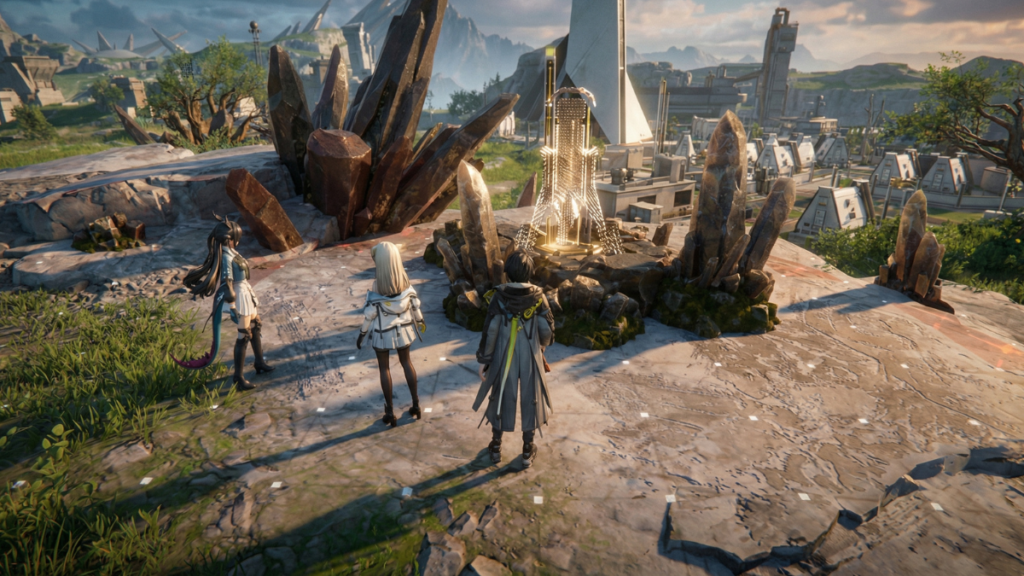
Hypergryph calls it the Automated Industrial Complex, or AIC, and once you start messing with it, the comparisons to Factorio or Satisfactory stop feeling hyperbolic. This isn’t decorative base-building. It’s an honest-to-god production system that will absolutely eat your time if you let it.
You’re setting up resource extractors out in the world, routing materials through processing plants, and stitching everything together with a logistics network that includes power lines, conveyor belts, pipes, and even ziplines for moving materials across awkward terrain. And yes, all of this is done directly in the game world using a 3D projection system. No abstract menus. You’re physically placing stuff, rotating it, and realizing too late that you’ve boxed yourself into a corner.
The basic loop is simple enough at first. You pull a structure from your inventory, project it into the world, hook it up to power, and then connect it to whatever comes next in the chain. Extraction leads to transport. Transport feeds processing. Processing spits out finished materials. Easy. Until it isn’t.
Because here’s the catch: this system isn’t optional flavor. It’s progression.
Enemies don’t just drop completed gear or upgrade materials. Instead, those things are manufactured. Your weapons, equipment, and character upgrades all come out of your factories. If your production chain is inefficient or broken, you feel it immediately. I learned this the hard way when I realized I’d built an entire processing line that wasn’t actually connected to power. Looked great, though.
The most dangerous part and I mean that affectionately is that resource extraction continues while you’re offline. Close the game, go to sleep, live your life. When you come back, your factories have been quietly churning away, dumping hundreds or even thousands of items into your inventory. It’s incredibly satisfying in a “numbers go up” way, and also slightly alarming once you realize how much you now care about conveyor throughput.
If all of this sounds like too much (fair), Endfield does give you an out. You can use prebuilt blueprints to slap together basic production chains without obsessing over every connection. But even then, you’re not fully off the hook. Those blueprints still have to be integrated into your existing AIC network, and terrain is always a factor. Distances, elevation, weird map geometry something always needs tweaking.
And once you’ve built something you’re proud of, you can save it as a blueprint and share it with other players. At that point, the whole system starts feeling less like traditional progression and more like user-generated content. Players trading factory layouts the way other games trade character builds. Starter setups, hyper-optimized extraction grids, absolute industrial monstrosities that only make sense if you squint.
Honestly, this is the part of Endfield that sold me. Not because it’s elegant it’s often messy and occasionally overwhelming but because it trusts players to engage with something deep and a little nerdy. You can dabble. Or you can go full factory goblin. The game doesn’t judge. It just keeps producing while you’re gone.
Release date and platforms
Arknights: Endfield was released today, January 22, 2026, on PC, PS5, iOS, and Android.
On PC, the game can be downloaded from the official website or through the Epic Games Store.
System requirements
Minimum system requirement
Processor: Intel Core i5-9400F or equivalent
Graphics card: NVIDIA GeForce GTX 1060 or equivalent
Memory: 16 GB RAM
Storage: 50 GB of free disk space
Additional: Extra 40 GB required temporarily for file unpacking
Recommended system requirements
Processor: Intel Core i7-10700K or equivalent (or better)
Graphics card: NVIDIA GeForce RTX 2060 or equivalent (or better)
Memory: 16 GB RAM
Storage: 50 GB of free disk space
Additional: Extra 40 GB required temporarily for file unpacking

I haven’t been working in the IT industry for very long, but ever since I was a kid I knew this was what I wanted to do. I started studying and tinkering with hardware when I was around 10 years old, although I had been using computers long before that , I used my first mouse at just 3 years old.
My studies focused on computer science topics, mainly cybersecurity. Over time, I discovered how much I enjoyed sharing hardware-related news and information with others.
Like many professionals in the industry, video games were one of my main motivations for getting into tech. They’re still a big part of my daily life, and I’m always keeping an eye on the latest announcements.
I’ve been working at PerfCore for a while now as a writer, and little by little I’m gaining experience in other roles as well such as doing in-depth product reviews and developing a more critical, analytical approach to hardware.