
Where Winds Meet Review : Gameplay & Performance


Everstone Studio and NetEase Games have crafted something genuinely special with Where Winds Meet. This open-world Wuxia action RPG lands on PC with ambitious visuals, sprawling environments, and a combat system that feels tailor-made for the precision of keyboard and mouse. Set against the breathtaking backdrop of ancient China, the game focuses on martial arts combat and open-world exploration, delivering an experience that stands shoulder to shoulder with the biggest titles in the genre.
But how does the PC version actually hold up? After extensive testing across multiple hardware configurations, diving deep into graphics settings, and spending countless hours mastering keybindings, I can confidently say the PC experience is impressive though not without a few rough edges that deserve honest discussion.
The graphical fidelity on a capable machine is jaw-dropping. Character models look remarkably detailed, environments stretch across vast distances with minimal pop-in, and the lighting system creates moments so beautiful you will instinctively reach for the screenshot key. Performance expectations should be tempered slightly depending on your hardware, but with the right configuration, this game sings on PC. Keyboard and mouse controls feel natural and responsive, giving combat a layer of precision that analog sticks simply cannot replicate.
Where Winds Meet
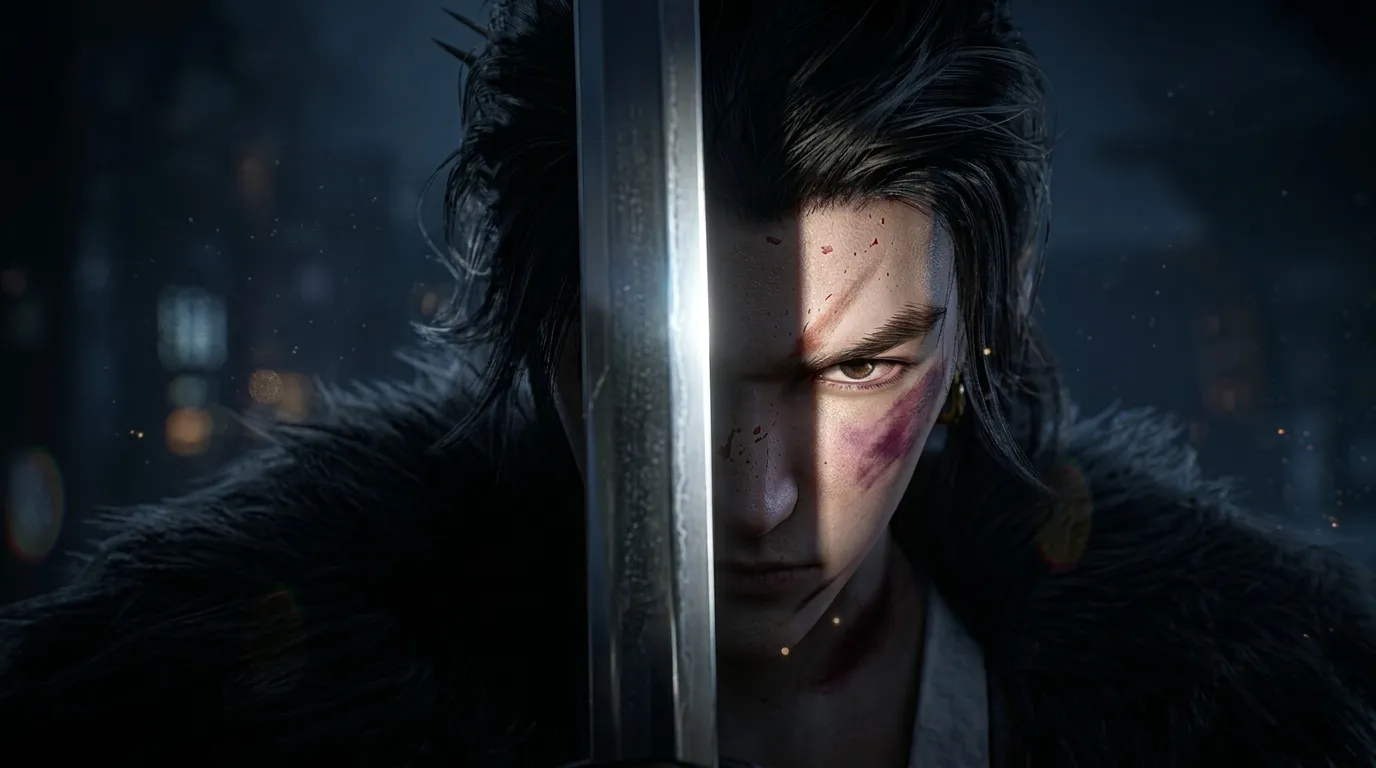
ACTION WUXIA RPGWhere Winds Meet is an engaging open-world action-adventure RPG set in 10th-century China during the Five Dynasties and Ten Kingdoms era. Master fluid martial arts combat, explore a sprawling historical landscape, and shape your destiny as a roaming swordsman on PC.
Table of Contents
Story and setting explained a wuxia world in chaos

The narrative drops you squarely into the Five Dynasties and Ten Kingdoms period, a brutal stretch of Chinese history spanning from 907 to 979 AD. Empires crumbled. Warlords carved territories out of the ashes. Loyalty became a commodity more valuable than gold, and betrayal lurked behind every silk curtain.
You step into this fractured world as a wandering swordsman with a clouded past. The beauty of the storytelling lies in how much agency you hold over your own journey. Rather than following a rigid narrative highway, the game allows you to shape your story through decisions that ripple outward in unexpected ways. Political intrigue, personal vendettas, and philosophical questions about honor and survival intertwine to create a narrative tapestry that never feels predictable. The writing respects your intelligence, and the historical setting provides a foundation rich enough to support dozens of hours of deeply engaging storytelling.
Where winds meet : review
Combat and gameplay on PC
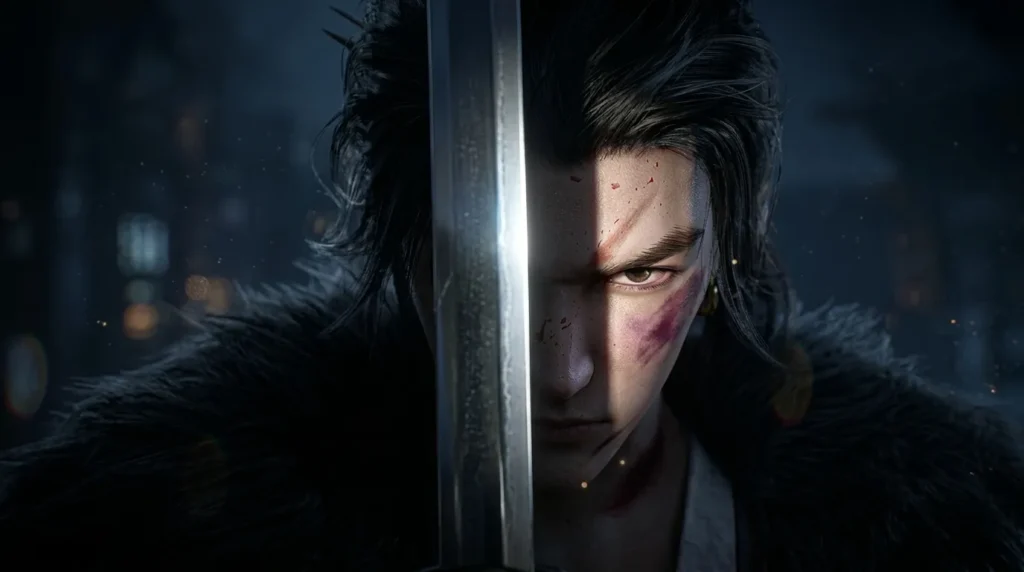
The core gameplay loop revolves around real-time martial arts combat, and the PC version handles it beautifully. Keybindings feel thoughtfully mapped right out of the box. Light attacks, heavy strikes, dodge rolls, and martial arts abilities each occupy intuitive positions on the keyboard, allowing your fingers to dance across keys during intense encounters without fumbling for the right button.
Camera control through the mouse is silky smooth. You can whip the perspective around mid-combo to track multiple enemies, zoom into tight duels for cinematic intensity, or pull back to survey the battlefield during larger skirmishes. Combat fluidity on PC genuinely surpasses what controllers offer in this particular title. The precision of mouse aiming elevates ranged abilities and directional attacks from functional to exceptional.
Every weapon style feels distinct under keyboard and mouse input. Swords demand quick taps and rapid directional shifts. Heavy weapons reward deliberate keystrokes with devastating payoffs. Stealth mechanics benefit enormously from the granular movement control that WASD provides, letting you creep through enemy camps with surgical accuracy.
Open-world exploration : a vast and living ancient china
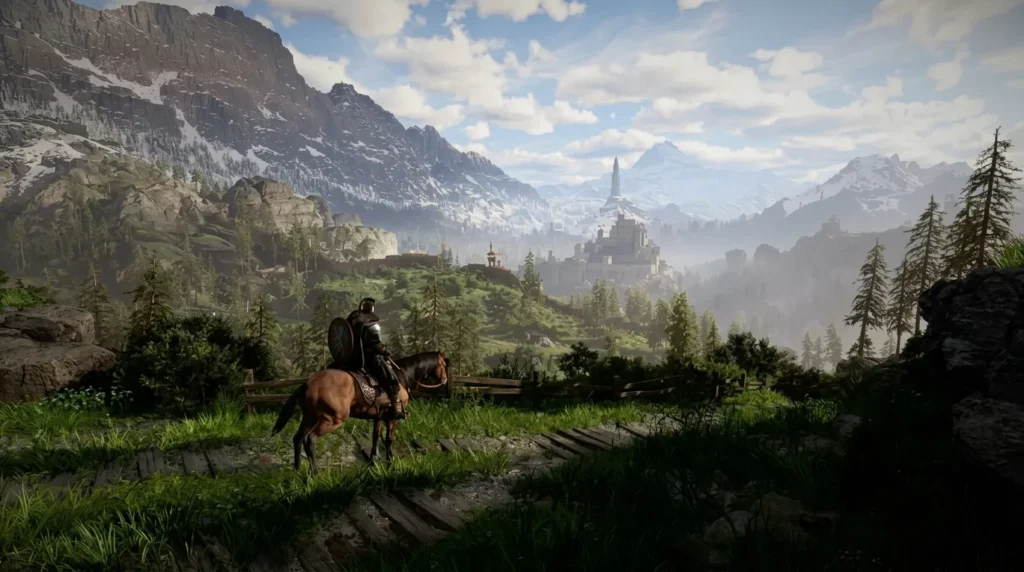
Exploring the world on PC is a genuine pleasure. The large open environments load seamlessly on machines equipped with solid-state drives, and navigation feels smooth whether you are galloping across open plains on horseback or scaling misty mountain ridges on foot. Interaction systems are clean and responsive approaching NPCs, examining objects, and triggering events all happen with simple keystrokes that never break immersion.
Cities feel dense and alive. Market vendors call out prices while children chase each other through narrow alleyways. Villages nestled beside rivers carry their own distinct atmosphere. Natural environments bamboo forests swaying under storm winds, frozen lakes reflecting pale moonlight reward exploration with breathtaking vistas and hidden secrets that never appear on your map unless you physically discover them.
Forging your path: RPG systems and progression
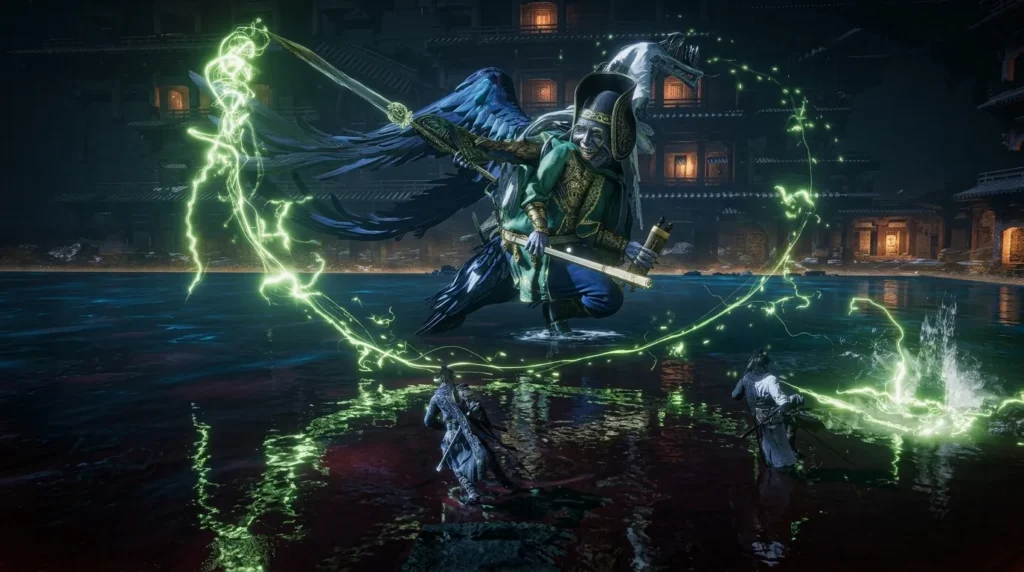
Character progression offers satisfying depth without drowning you in complexity. Skill trees branch across multiple martial arts disciplines, letting you specialize or diversify depending on your preferred approach. Want to channel internal energy into devastating palm strikes? Invest in those nodes. Prefer mastering the blade until no enemy can touch you? That pathway is equally rewarding.
Character builds feel meaningfully different from one another. A stealth-focused swordsman plays nothing like a heavy-weapon brawler who relies on raw power and armor. Progression systems reward both combat mastery and exploration, ensuring that players who prefer wandering off the beaten path level up just as organically as those who charge headfirst into every fight.
Dialing it in: graphics settings and optimization
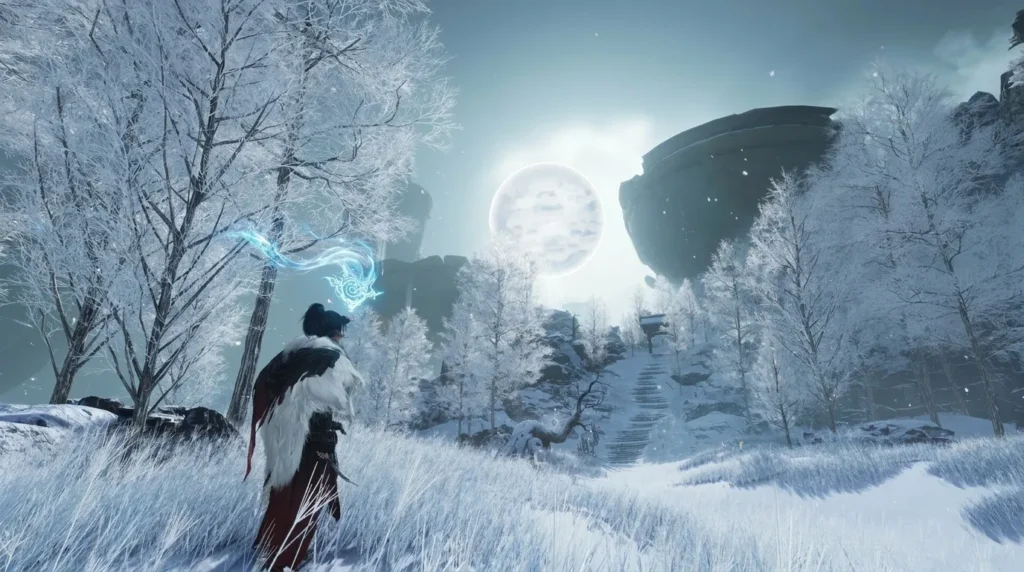
The PC version ships with a comprehensive suite of graphics options that will make enthusiasts very happy. Resolution scaling, texture quality, shadow detail, ambient occlusion, volumetric fog density, and anti-aliasing methods are all individually adjustable. Ray tracing support is included for compatible hardware, and when enabled, reflections on water surfaces and metallic armor gain a photorealistic quality that genuinely enhances the atmosphere.
Optimization is solid but not flawless. High-end systems running modern GPUs can push ultra settings at 1440p with comfortable frame rates. Mid-range configurations might need to compromise on shadow quality and volumetric effects to maintain smooth performance. The developers clearly invested effort into scalability, because even modest rigs can achieve a visually appealing experience at lower presets without the game looking stripped bare.
Under the hood: performance and stability
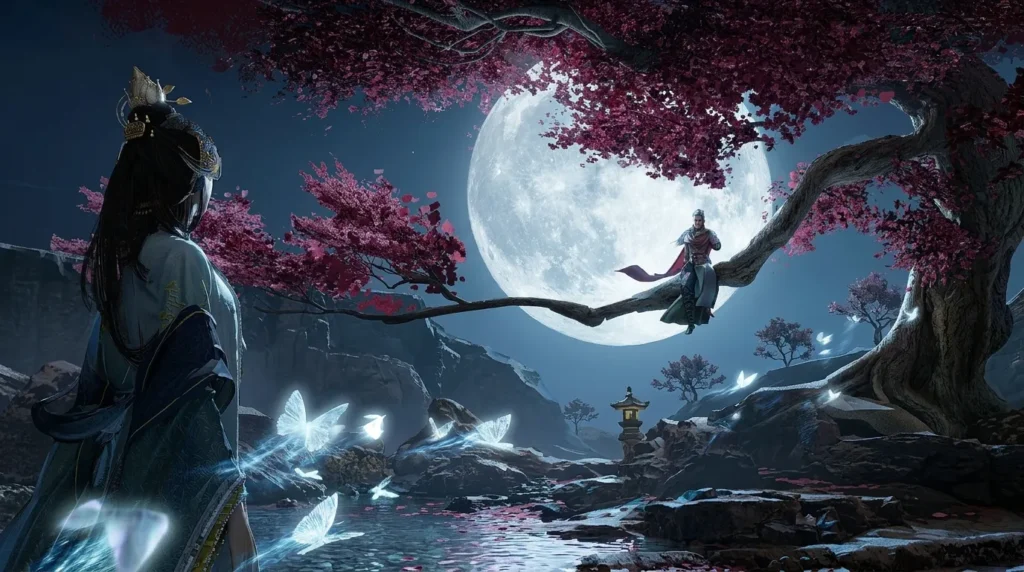
Frame rate performance on a well-configured system is generally excellent. Holding sixty frames per second at high settings on recommended-tier hardware is achievable in most scenarios, though densely populated city areas can cause occasional dips. Loading times on NVMe drives are remarkably short, often clocking under ten seconds for fast travel transitions.
Stability has been mostly reliable throughout testing. No hard crashes occurred during extended play sessions, and visual bugs were limited to occasional texture flickering on distant terrain a minor annoyance rather than a deal-breaker. Patches have already addressed several early issues, and the development team appears committed to ongoing optimization.
Minimum system requirements
To run Where Winds Meet at basic settings, your PC should meet the following minimum specifications :
- Storage Type: SSD recommended for faster loading times
- Processor: Intel Core i5-8400 / AMD Ryzen 5 2600
- Memory (RAM): 16 GB
- Graphics Card: NVIDIA GeForce GTX 1060 / AMD Radeon RX 580 (6 GB VRAM) Storage: 80 GB available space
Recommended system requirements
For smooth gameplay at high graphical settings, your PC should meet the following recommended specifications:
- Processor: Intel Core i7-10700 / AMD Ryzen 7 3700X
- Memory (RAM): 32 GB
- Graphics Card: NVIDIA GeForce RTX 3070 / AMD Radeon RX 6800 XT (8 GB VRAM or higher)
- Storage: 80 GB available space
- Storage Type: NVMe SSD strongly recommended
- Target Performance: 1440p resolution, high settings, ray tracing (moderate)
To get the best performance in Where Winds Meet, check out our guide to optimizing your gaming PC for maximum FPS.
Keyboard warriors rejoice

The keyboard and mouse experience feels polished and intentional. Default keybindings are sensible, and every single input can be rebound through a clean customization menu. The user interface scales well across different resolutions and remains crisp whether you are playing on a standard monitor or an ultrawide display. Menu navigation is snappy, inventory management is straightforward, and HUD elements can be toggled individually for those who prefer minimal screen clutter.
Accessibility options include adjustable subtitle sizes, colorblind modes, and input sensitivity sliders that let you fine-tune mouse responsiveness to your exact preference.
Final Verdict
Absolutely. Where Winds Meet on PC delivers a Wuxia experience that is visually stunning, mechanically rewarding, and deeply immersive. The keyboard and mouse controls elevate combat beyond what console counterparts can offer, and the extensive graphics options ensure that a wide range of hardware configurations can enjoy the game. Minor performance hiccups in crowded areas and occasional visual quirks prevent perfection, but these are small blemishes on an otherwise remarkable achievement.
This PC version is best suited for fans of Wuxia storytelling, open-world RPG enthusiasts who value meaningful exploration, and anyone who appreciates a combat system built on skill rather than spectacle alone. If your rig meets the recommended specifications, you owe it to yourself to experience this world firsthand. Where Winds Meet is not just a great Wuxia game it is one of the finest action RPGs to grace the PC platform in recent memory.
Where Winds Meet
ACTION WUXIA RPGWhere Winds Meet is an engaging open-world action-adventure RPG set in 10th-century China during the Five Dynasties and Ten Kingdoms era. Master fluid martial arts combat, explore a sprawling historical landscape, and shape your destiny as a roaming swordsman on PC.

Allen Wade is a Senior PC Hardware & Performance Analyst at PerfCore with over 8 years of experience benchmarking CPUs, GPUs, gaming laptops, and system architectures. He specializes in 1080p and 1440p frametime analysis, thermal dynamics, and budget component optimization. Allen’s hardware testing methodology relies on standardized test benches, repeatable CapFrameX frametime captures, and clean OS environments.