
Best Logitech G Embody gaming chair review 2026

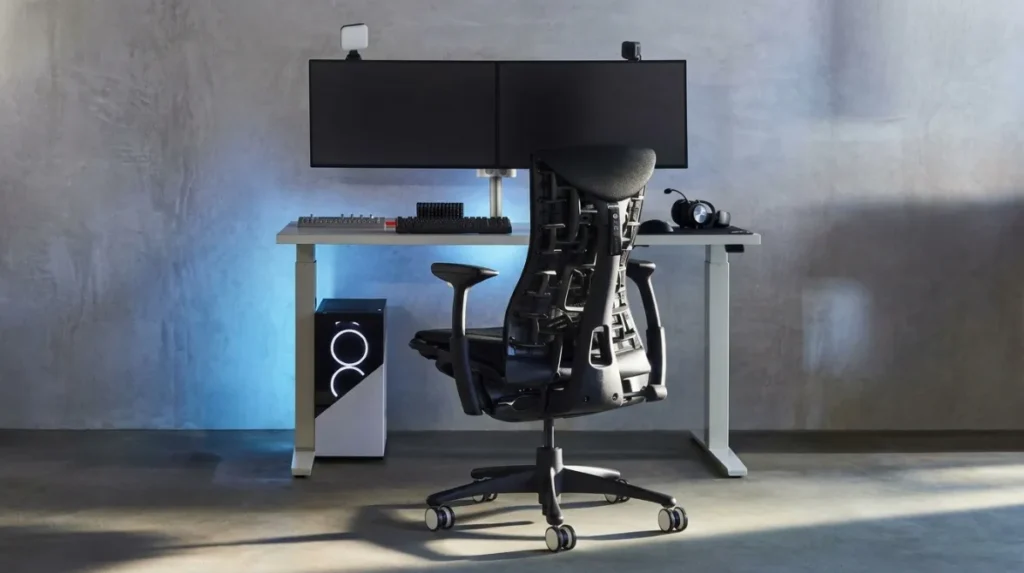
Most gaming chairs look the same. Big padding, fake leather, racing seat vibes, and a logo slapped across the back. The Herman Miller x Logitech G Embody gaming chair ignores all of that. No headrest pillow. No lumbar cushion. No aggressive styling. Just a mid-back, sci-fi-looking chair built around one thing: keeping your body in the right position for hours.
Whether that’s worth $1,695 depends entirely on who you are and how long you sit.
Table of Contents
What makes the Logitech G Embody different
The Embody isn’t a gaming chair pretending to be ergonomic. It started as a genuine office chair developed by Herman Miller back in 2009, with input from over 20 physicians and PhDs in physical therapy and biomechanics. Logitech came in later to adapt it for gamers, adding a thicker seat pad, copper-infused cooling foam, and the brand’s signature blue accents.
That’s it. The changes are minimal on purpose. Herman Miller didn’t want to ruin what already worked.
The result is a chair that looks completely unlike anything else in a gaming setup. No throne. No pleather. Instead, you get a streamlined silhouette, a pixelated flexible backrest that almost looks like a spine, and a build quality so solid it barely feels like furniture.
The backrest: the real reason people buy this chair
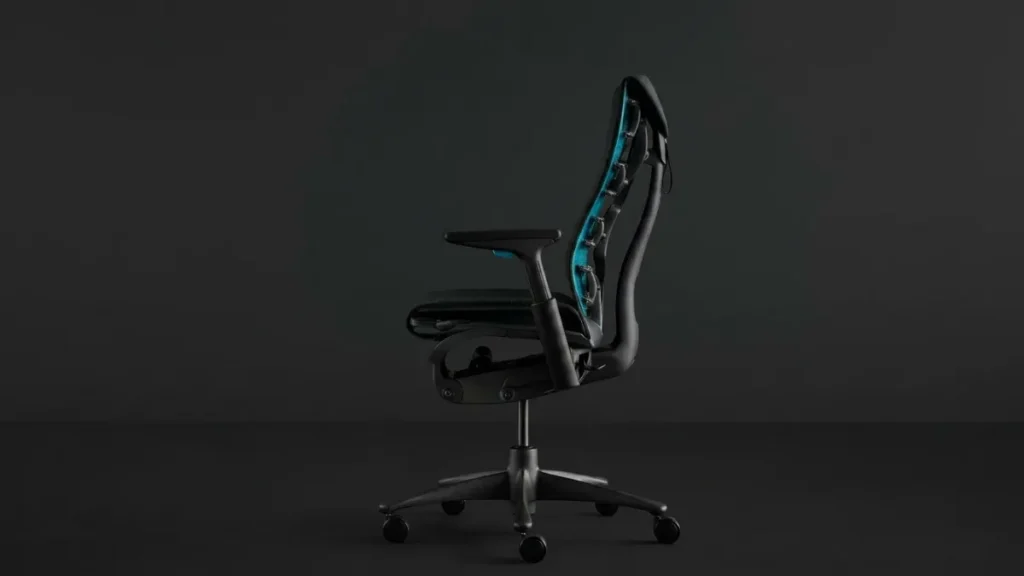
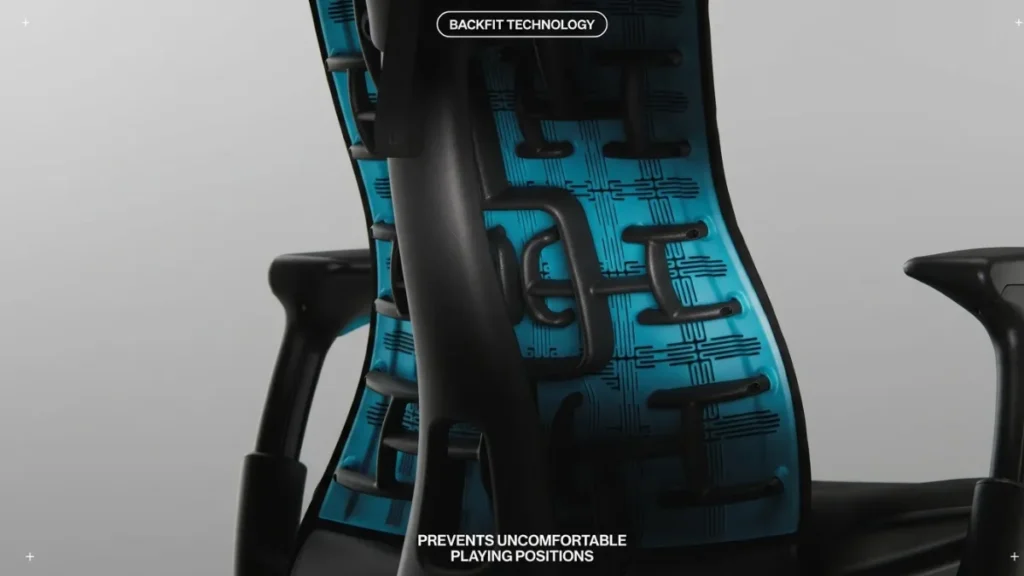
The BackFit system on the Logitech G Embody is what separates it from every competitor in this price range. There’s no lumbar knob, no rod, no cushion. The entire backrest flexes and conforms to your spine as you move. It supports your back whether you’re leaning forward to focus, sitting upright, or shifting during a long session.
The adjustable spine system creates a curved support that distributes pressure automatically as you change positions, preventing legs from tingling or stiffening up after hours of gameplay.
With the way the backrest supports the entire spine, you are less likely to feel the need to lean forward or readjust. Other chairs often require consciously sitting in them properly, but this one moves with you.
There’s no headrest, which surprises people at first. Herman Miller says you don’t need one with this design, and most long-term users agree. The upper back support is solid enough that your neck stays naturally aligned without an extra attachment.
Build quality and materials
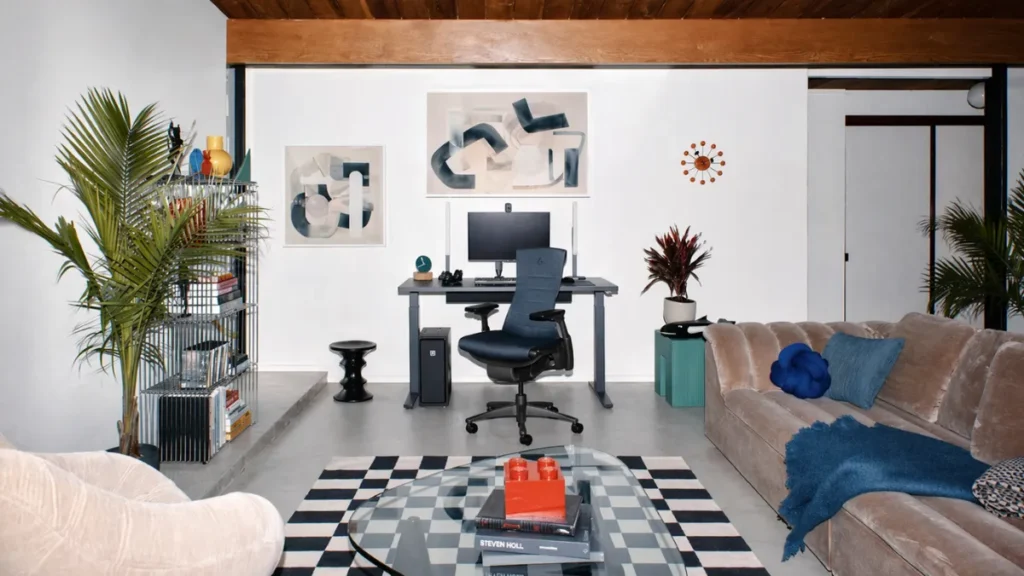
Every single aspect of the Embody feels sturdy, precise, and finished to the highest degree. There’s not a wobble or rattle to be found.The aluminum base with five dual-wheel casters works on both hardwood and carpet, and the whole frame has a lightness to it that heavier gaming chairs can’t match.
The upholstery is a polyester Sync fabric that stretches with your body. It’s tested for durability, color resistance, and flame resistance. The fabric is just the right amount of breathable and flexible, and the backrest moves around with you and hugs your spine.
One note: don’t expect mesh-level airflow. The Embody runs warmer than you might expect during summer sessions. It’s significantly better than leather or faux leather, but it’s not as breathable as a full mesh chair.
Adjustability
The Logitech G Embody gives you:
- Seat height via standard pneumatic lift
- Seat depth adjustment to fit different leg lengths
- Armrest height and width with a 4D range of motion
- BackFit tension control for spine curvature support
- Tilt limiter with multiple lock positions up to about 45 degrees
- Tilt tension to adjust how much resistance you feel leaning back
It took a few days to understand all the tilt limiter and armrest controls. A quick-start guide or app-based tutorial could make it easier for first-time users. That learning curve is real. Unlike most gaming chairs where everything is obvious, the Embody requires a bit of reading before you get the full benefit.
Once dialed in though, it fits almost any body type. The chair supports up to 136 kg (300 lbs) and works well for both taller and shorter users thanks to the seat depth range.
How it holds up for long gaming sessions
This is where the Embody genuinely earns its price. It is exceptionally comfortable during long working and gaming sessions and is built from stable, durable materials.
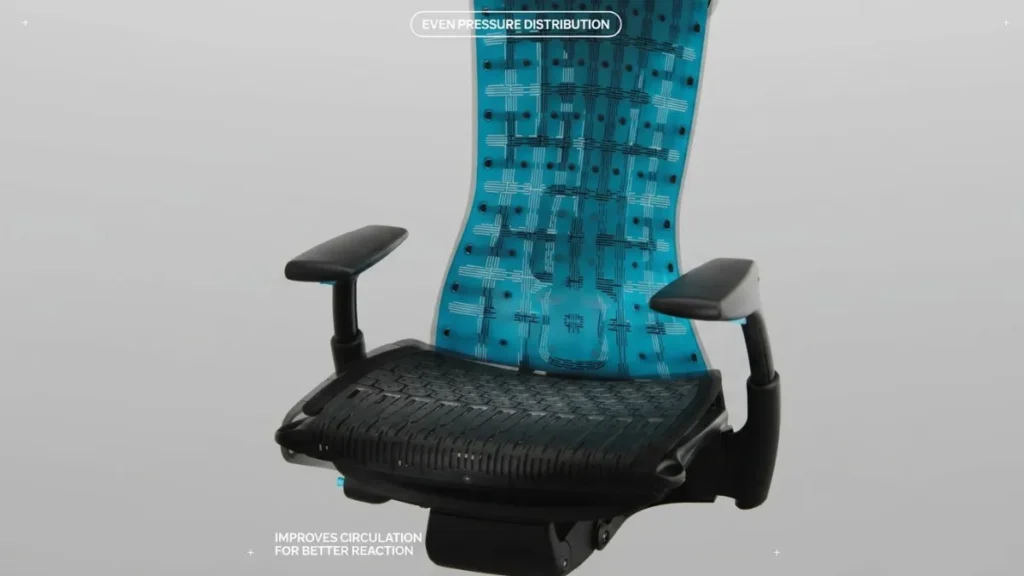
The copper-infused cooling foam in the seat helps manage heat buildup over time, which is a real problem with traditional gaming chair padding. The seat’s pressure distribution system prevents the leg numbness that shows up with cheaper chairs after two or three hours.
The Embody Gaming Chair is one of the few purchases in this space that you can say is an investment proven to last and be worthwhile. That 12-year warranty backs it up. Herman Miller doesn’t hand those out lightly.
Logitech G Embody vs Secretlab Titan Evo
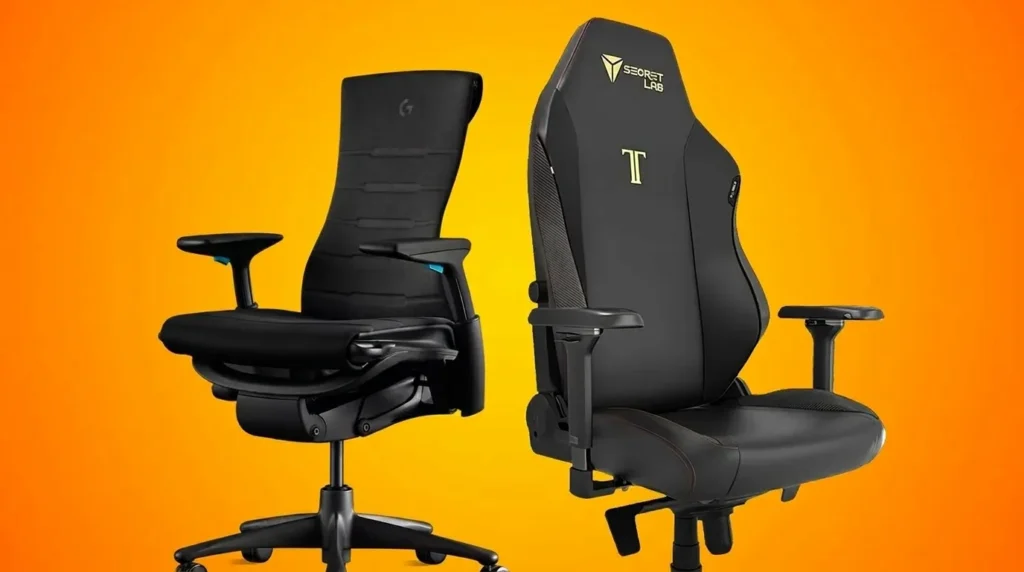
The Secretlab Titan Evo is the most common alternative that comes up in this price bracket, sitting around $500 to $600.
| Logitech G Embody | Secretlab Titan Evo | |
|---|---|---|
| Price | ~$1,695 | ~$519 |
| Lumbar support | Dynamic spine system | Adjustable lumbar knob |
| Headrest | None | Included |
| Warranty | 12 years | 5 years |
| Best for | Long sessions, back health | Versatile daily gaming |
The Secretlab Titan Evo is excellent for shorter sessions, but it doesn’t match the Embody’s natural spine support or long-term comfort
If you game 6 to 10 hours a day and you have back issues, the Embody is the better call. If you’re a casual gamer sitting for 2 to 3 hours, the Titan Evo saves you over $1,000 without a dramatic quality drop.
Who should actually buy this chair

The Logitech G Embody makes sense for:
- Content creators and streamers who sit all day
- Remote workers who also game and want one chair for both
- Anyone with existing back pain who needs real ergonomic support
- Esports players looking for a long-term investment (used by 24 pro players as of early 2026)
It’s not for:
- Casual gamers who play 1 to 2 hours a session
- Anyone on a budget under $800
- People who specifically want a headrest or lumbar pillow setup
Final verdict
The Herman Miller x Logitech G Embody gaming chair isn’t cheap and it doesn’t pretend to be. At $1,695, you’re buying one of the most ergonomically engineered seats available, with a 12-year warranty and build quality that genuinely lasts. The sci-fi aesthetic is a bonus. The back support is the actual product.
If you sit for a living and you game on top of that, this chair pays for itself in back health alone. If you’re looking for a casual seat to complement a budget setup, look elsewhere.
For a more affordable alternative, check out our guide to [Top 5 Gaming Chairs in 2026] or if you’re already convinced, you can buy the Embody directly from Herman Miller’s official site.

Sara Jakob is the Senior Gaming Software & Systems Editor at PerfCore, specializing in PC game optimization, browser performance benchmarks, and free-to-play MMO mechanics. With a background in computer science and software testing, Sara leads PerfCore’s game setting optimization guides and software utility reviews.