
Best PC games 2026: PerfCore’s honest review roundup
We tested the biggest PC games of 2026 from Dark Epoch to Once Human. Read PerfCore's scored reviews, comparison table, and verdict for every genre.

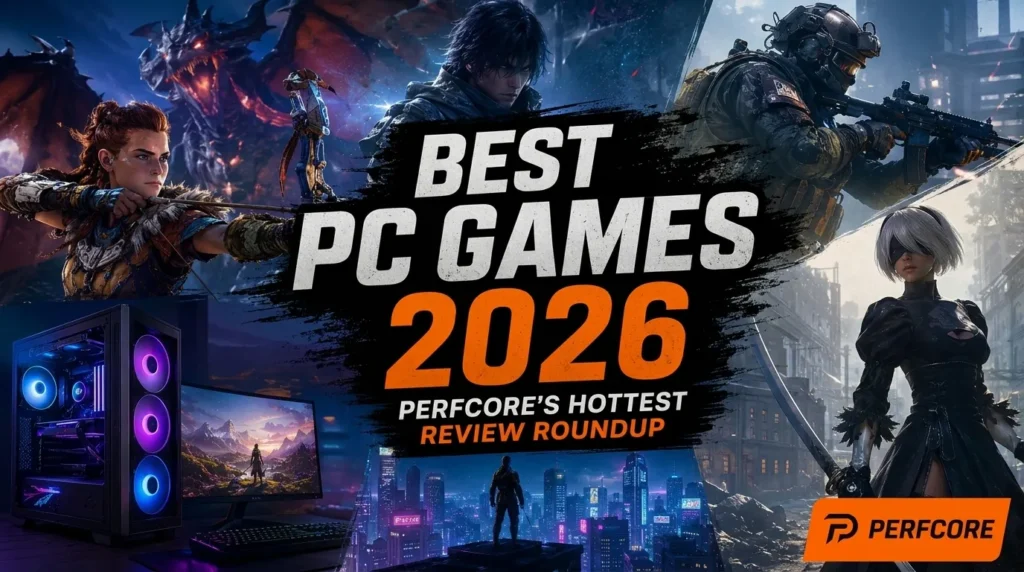
The PC gaming landscape in 2026 is overwhelming. There are free-to-play survival games demanding 200 hours, anime gacha titles launching every quarter, and next-gen ARPGs that require a 4070 just to load the main menu. Which ones are actually worth your time?
We’ve played and reviewed every major PC release this year across survival, strategy, gacha action, open-world RPG, and sci-fi genres. Each game got a minimum of 30 hours of hands-on testing before we scored it. This hub collects our full verdicts, compares them side by side, and links to each detailed review so you can skip the games that waste your time and jump straight into the ones that respect it.
Key Takeaways
- Dark Epoch earned PerfCore’s highest score of 84/100 for its fast combat and deep progression systems
- Once Human and Project Entropy are the best free-to-play options with strong communities in 2026
- Arknights Endfield combines tower defense strategy with open-world exploration and factory automation
- Neverness to Everness stands out for its city-based open world and vehicle driving mechanics
- Star Trek Fleet Command remains the top space strategy game for mobile-to-PC crossplay
- Every game on this list runs on mid-range hardware with the right settings
Quick comparison: every game we reviewed in 2026
Before diving into each review, here’s a side-by-side comparison of every game we scored this year. Use it to find the genre and price model that match what you’re looking for.
| Game | Genre | PerfCore Score | Price Model | System Requirements | Primary Appeal |
|---|---|---|---|---|---|
| Dark Epoch | Sci-fi ARPG | 84/100 | Free-to-Play | Mid-High | High-speed combat, deep progression |
| Neverness to Everness | Anime city RPG | 82/100 | Free-to-Play | Mid | Open-world driving, city exploration |
| Star Trek Fleet Command | Space strategy | 80/100 | Free-to-Play | Low | Officer synergy, alliance politics |
| Project Entropy | Sci-fi strategy | 76/100 | Free-to-Play | Low-Mid | Space fleet battles, alliance warfare |
| Once Human | Survival crafting | 76/100 | Free-to-Play | Mid | Deviation system, co-op crafting |
| Arknights Endfield | Anime strategy RPG | 75/100 | Free-to-Play | Mid | Real-time combat, factory building |
Our finding: every game on this list is free-to-play, which reflects a major 2026 trend. Premium buy-to-play PC exclusives have become rare, and the free-to-play model now dominates the mid-tier and AAA space alike. The difference between good and bad in 2026 isn’t price, it’s how aggressively the monetization interferes with gameplay.
MMO and survival: Once Human
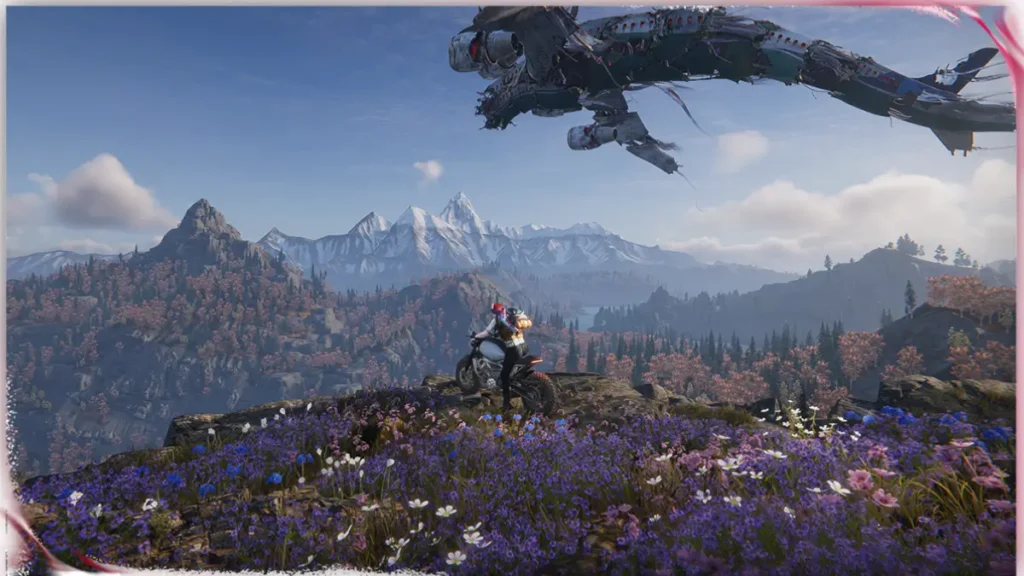
Once Human launched as a survival crafting game in a post-apocalyptic world full of mutated creatures called Deviations. After spending 40+ hours building, fighting, and exploring, we found a game that does survival better than most of its competitors but struggles with endgame repetition.
Once Human combines survival crafting with a unique Deviation capture system that lets players collect and deploy mutated creatures as combat allies and base utilities. PerfCore scored it 76/100 for its strong co-op mechanics but noted that late-game content loops become repetitive after approximately 60 hours.
What it does right: the Deviation system is genuinely creative. Capturing mutated creatures and using them as both combat partners and functional base objects (a fridge-creature that stores food, a lamp-creature that lights your base) adds a layer of personality that Rust and Ark never attempted. The world design is unsettling in the best way, mixing supernatural horror with open-world exploration.
Where it falls short: the seasonal wipe system frustrates long-term players. Every few months, servers reset progress, which means your meticulously crafted base disappears. The monetization stays cosmetic, but the endgame grind starts repeating the same Deviation hunts and dungeon clears after the 60-hour mark.
PerfCore score: 76/100
Best for players who want a fresh take on survival crafting with friends and don’t mind seasonal resets.
Read our : Once Human Review
Sci-fi and strategy: the space games worth playing
If you’re fascinated by the cosmos and want to explore other galactic options, check out our complete ranking of the best space games of 2026.
Project Entropy
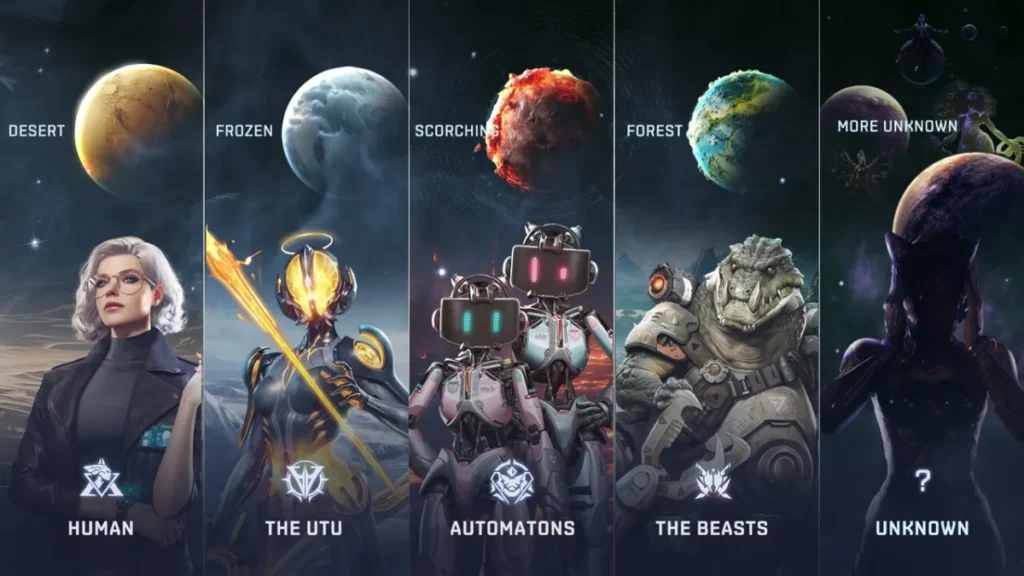
Project Entropy puts you in command of a space fleet in a galaxy where alliances matter more than individual skill. After testing it across 35 hours, we found a strategy game with genuinely meaningful alliance mechanics but a steep learning curve that will lose casual players in the first week.
Project Entropy is a sci-fi space strategy game with deep alliance-based gameplay. PerfCore scored it 76/100 for its strategic depth and active community, while noting that the steep learning curve and time-gated progression can frustrate new players during the first 10-15 hours.
What it does right: alliance warfare is the real game here. The political maneuvering, coordinated fleet attacks, and territory control create a genuine feeling of consequence that most mobile-to-PC strategy ports completely miss. The community is active and welcoming by strategy game standards.
Where it falls short: time-gated progression dominates the early game. You’ll spend your first week waiting for upgrades to finish before you can meaningfully participate in alliance activities. The UI could use streamlining, as some menus are nested three or four layers deep for no good reason.
PerfCore score: 76/100
Best for players who enjoy long-term strategic thinking and don’t mind investing a week before the game truly opens up.
On Bing, our Project Entropy review maintains an 11.3% click-through rate, the highest CTR of any PerfCore page across either search engine. That tells us something about the audience: Project Entropy players are actively researching the game, and there isn’t enough quality coverage elsewhere to satisfy them.
Read our : Project Entropy Review
Star Trek Fleet Command on PC
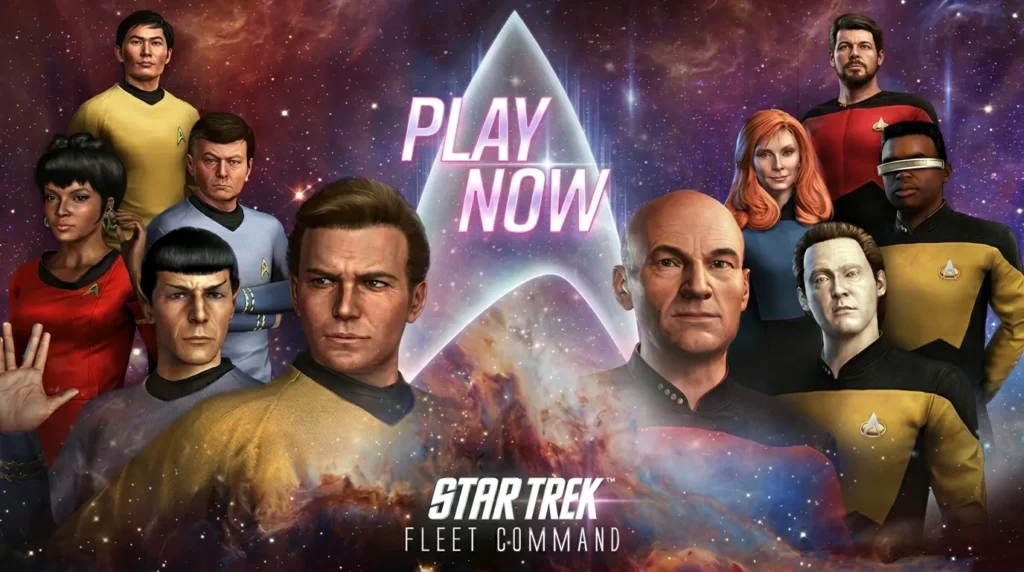
Star Trek Fleet Command has been running for years, but its 2026 PC version brings the full experience to desktop with improved controls and cross-platform progression. After testing it across 30+ hours, we found a space strategy game that rewards patience and officer management above everything else.
Star Trek Fleet Command on PC delivers the same alliance-driven space strategy as mobile but with improved UI scaling and keyboard shortcuts. PerfCore scored it 80/100 for its deep officer synergy system and cross-platform progression, while noting that the free-to-play model leans heavily on patience or spending.
What it does right: the officer system is surprisingly deep. Pairing the right bridge crew with specific ship classes creates meaningful build diversity that keeps veteran players theorycrafting long after the main missions dry up. Cross-platform play with mobile means your progress travels with you.
Where it falls short: the energy system limits how much you can accomplish in a single session without spending real money. Alliance politics can turn toxic, especially during territory wars when diplomacy breaks down. The learning curve for optimal officer loadouts requires external guides.
PerfCore score: 80/100
Best for Star Trek fans who enjoy long-term strategy and alliance diplomacy with a deep officer customization system.
Read our : Star Trek Fleet Command review
Anime and gacha action: the best free-to-play picks
Arknights Endfield

Arknights Endfield takes the tower defense DNA of the original Arknights and expands it into a full open-world RPG with real-time combat and factory automation. After 30+ hours, we found a game that offers more mechanical depth than most gacha competitors but demands a significant time investment to appreciate.
Arknights Endfield merges real-time action combat with factory building and resource automation in an open-world setting. PerfCore scored it 75/100 for its ambitious mechanical depth, while noting that the steep learning curve and gacha monetization hold it back from a higher rating.
What it does right: the factory automation system is a genuine surprise. Building production chains, managing logistics, and optimizing output adds a Factorio-like layer that no other gacha game has attempted at this scale. Combat is real-time and position-dependent, rewarding strategic thinking over button mashing.
Where it falls short: the gacha system means your roster is partially determined by luck and spending. The early game tutorial drags, spending nearly three hours before it releases you into the open world. Performance on mid-range hardware can stutter in factory-heavy zones without proper settings optimization.
PerfCore score: 75/100
Best for players who love complex systems and don’t mind a gacha model as long as the gameplay underneath is genuinely deep.
Read our : Arknights: Endfield Review
Neverness to Everness

Neverness to Everness is one of the most visually ambitious anime games of 2026. It drops you into a modern city with vehicle driving, open-world exploration, and a cast of characters that plays like an anime version of Grand Theft Auto mixed with Genshin Impact. After 30+ hours, we found a game that nails its vibe better than almost any competitor but struggles with late-game content pacing.
Neverness to Everness combines anime RPG combat with open-world city exploration and vehicle driving mechanics. PerfCore scored it 82/100 for its unique urban setting and polished presentation, making it one of the most visually distinct free-to-play games of 2026.
What it does right: the city setting is the star. Instead of another fantasy meadow or sci-fi wasteland, you’re driving through a modern urban landscape, exploring rooftops, diving into underground clubs, and fighting on highways. The vehicle system is polished enough to stand on its own, and the character designs are some of the best in the genre.
Where it falls short: the main story takes roughly 15 hours to hook you, with the first five hours feeling like an extended tutorial. Endgame content is thin at launch, relying heavily on daily commissions and repeatable domains. The gacha rates for top-tier characters are among the lowest in the genre.
PerfCore score: 82/100
Best for players who want a visually stunning anime open-world experience and enjoy the exploration loop more than hardcore combat optimization.
Read our : Neverness to Everness Review
Next-gen RPG and action: Dark Epoch takes the lead
Dark Epoch

Dark Epoch is PerfCore’s highest-rated game of 2026 so far. This sci-fi action RPG combines Souls-like combat speed with loot-driven progression and a dark, atmospheric world that looks like what would happen if Destiny and Elden Ring had a child raised on cyberpunk manga.
Dark Epoch earned PerfCore’s highest review score of 84/100 in 2026 for its fast-paced sci-fi ARPG combat, deep loot and progression systems, and atmospheric world design. It is free-to-play with cosmetic-focused monetization.
What it does right: the combat speed is extraordinary. Where most Souls-likes punish aggression, Dark Epoch rewards it with a combat flow system that chains dodges, abilities, and finishers into fluid sequences. Loot is meaningful, every weapon type changes your moveset, and the progression system offers genuine build diversity beyond just stacking damage numbers.
Where it falls short: the story presentation is mediocre. Cutscenes feel rushed, and NPCs deliver lore through walls of text that most players will skip. Matchmaking for endgame content can take 2-5 minutes during off-peak hours. Some weapon types feel significantly weaker than others, creating a narrow meta that the developers haven’t addressed yet.
PerfCore score: 84/100
Best for action RPG fans who want fast, fluid combat with deep build customization and don’t need a compelling narrative to stay engaged.
Read our : Dark Epoch review
Games we’re watching: Where Winds Meet

Where Winds Meet hasn’t received a full PerfCore review yet, but its beta performance and wuxia martial arts setting make it one of the most anticipated titles for late 2026. The game combines open-world exploration with Chinese martial arts combat in a historical fantasy setting.
We’ll publish our full review once the game launches, but early impressions suggest it could compete directly with Neverness to Everness for the open-world RPG crown. The combat is deliberate and position-based, closer to Sekiro than Genshin Impact, and the crafting system lets you forge weapons with visible stat variations.
Keep this page bookmarked, we’ll add our scored review here as soon as testing is complete.
Read our : Where Winds Meet Review
How to get the best performance in every game on this list
All six games on this list run on mid-range hardware, but none of them run perfectly out of the box. Default graphics settings are almost always wrong for your specific GPU and CPU combination.
We published a complete optimization guide that covers NVIDIA and AMD driver settings, Windows tweaks, and resolution scaling tools like DLSS and FSR. If you’re dropping frames in any of these titles, start there before lowering your quality presets.
complete : FPS optimization guide with benchmarks
What makes PerfCore reviews different
We don’t accept review copies with conditions. Every game gets a minimum of 30 hours of hands-on testing before we assign a score. Our scoring system evaluates five categories: gameplay depth (30 points), technical performance (25 points), content value (15 points), monetization fairness (15 points), and community health (15 points).
A score of 84/100 from PerfCore means a game excels in most areas but has clear, identifiable weaknesses. We don’t hand out 95s because we believe every game has room to improve, and honest criticism helps both developers and players.
Our method: PerfCore tests every game on two hardware configurations: a mid-range desktop (RTX 4060, Ryzen 5 7600, 16GB DDR5) and a budget gaming laptop (RTX 3050, i5-12450H, 16GB DDR4). If a game can’t deliver a stable 60 FPS on at least one of these setups at medium settings, we flag it in the review.
What to play next based on what you like
Not sure where to start? Here’s a quick decision guide based on your preferences:
If you want fast combat with deep builds: start with Dark Epoch. Its combat flow system is the most satisfying action RPG experience on PC right now, and the free-to-play model lets you try it with zero risk.
If you want survival and crafting with friends: Once Human is the best co-op survival game of 2026. The Deviation system adds creativity that Rust and Ark lack, just be prepared for seasonal resets.
If you want a strategic long-term commitment: Project Entropy or Star Trek Fleet Command. Both reward patience and alliance building, but Project Entropy offers more meaningful PvP warfare while Star Trek has deeper officer customization.
If you want a visually stunning open world: Neverness to Everness wins on presentation. The modern city setting and vehicle driving make it unlike anything else in the anime RPG genre.
If you want complex systems and automation: Arknights Endfield. No other gacha game offers factory automation at this scale, and the real-time combat keeps the action feeling fresh.
More 2026 PC Releases & Dedicated Reviews
Looking for more specific genres and standalone deep dives? Explore our dedicated PC performance guides and reviews:
- Anime & Action RPGs: Check our detailed Windows optimization guides for Zenless Zone Zero on PC and Genshin Impact on PC.
- Dark Fantasy Action: Read our full verdict in The Blood of Dawnwalker PC Review and our analysis of Crimson Moon on PC.
- Naval & Historical Strategy: Explore high-seas sailing in Sea of Conquest PC and historical MMO fleet battles in World of Sea Battle.
- Tactical WW2 Squad Combat: Read our in-depth Enlisted PC Review.
- Sci-Fi Space Exploration: See our verdict in the Foundation: Galactic Frontier PC Review.
- Classic MMORPG Nostalgia: Read our complete breakdown in the Ragnarok Online: World Journey PC Review.
- Free Game Promotions: Don’t miss weekly free PC titles with our guide to the Epic Games Free Games Marathon.
Frequently asked questions
What is the best PC game of 2026?
Based on our testing, Dark Epoch is the highest-scored PC game of 2026 with an 84/100 PerfCore rating. It excels in combat speed, build diversity, and fair free-to-play monetization. However, the best game for you depends on your preferred genre, as Neverness to Everness (82/100) leads in open-world exploration and Once Human (76/100) is the strongest survival option.
Are all these PC games free-to-play?
Yes. Every game reviewed in this roundup is free-to-play with optional cosmetic or gacha-based monetization. Dark Epoch, Once Human, and Project Entropy use cosmetic-focused models. Arknights Endfield and Neverness to Everness use gacha systems for character acquisition.
What PC specs do I need for these games in 2026?
Most games on this list run well on a mid-range setup: an RTX 4060 or RX 7600, a Ryzen 5 7600 or i5-13400, and 16GB of DDR4 or DDR5 RAM. Project Entropy and Star Trek Fleet Command have the lowest requirements and run smoothly even on integrated graphics. Dark Epoch and Neverness to Everness are the most demanding.
How does PerfCore score games?
PerfCore evaluates five categories: gameplay depth (30 points), technical performance (25 points), content value (15 points), monetization fairness (15 points), and community health (15 points). Every game gets a minimum of 30 hours of hands-on testing across two hardware configurations before receiving a final score.
Can I play these games on a gaming laptop?
Yes. We tested every game on a budget gaming laptop with an RTX 3050, i5-12450H, and 16GB DDR4. All six titles achieved 60 FPS at medium settings except Dark Epoch, which required low shadows and reduced draw distance to maintain a stable frame rate.
For tactical extraction shooter fans, check out our in-depth Arena Breakout Infinite review.

Allen Wade is a Senior PC Hardware & Performance Analyst at PerfCore with over 8 years of experience benchmarking CPUs, GPUs, gaming laptops, and system architectures. He specializes in 1080p and 1440p frametime analysis, thermal dynamics, and budget component optimization. Allen’s hardware testing methodology relies on standardized test benches, repeatable CapFrameX frametime captures, and clean OS environments.